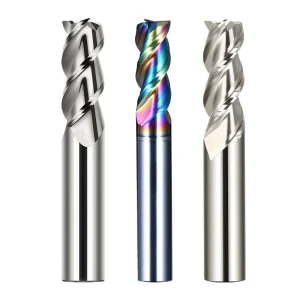
Product Description
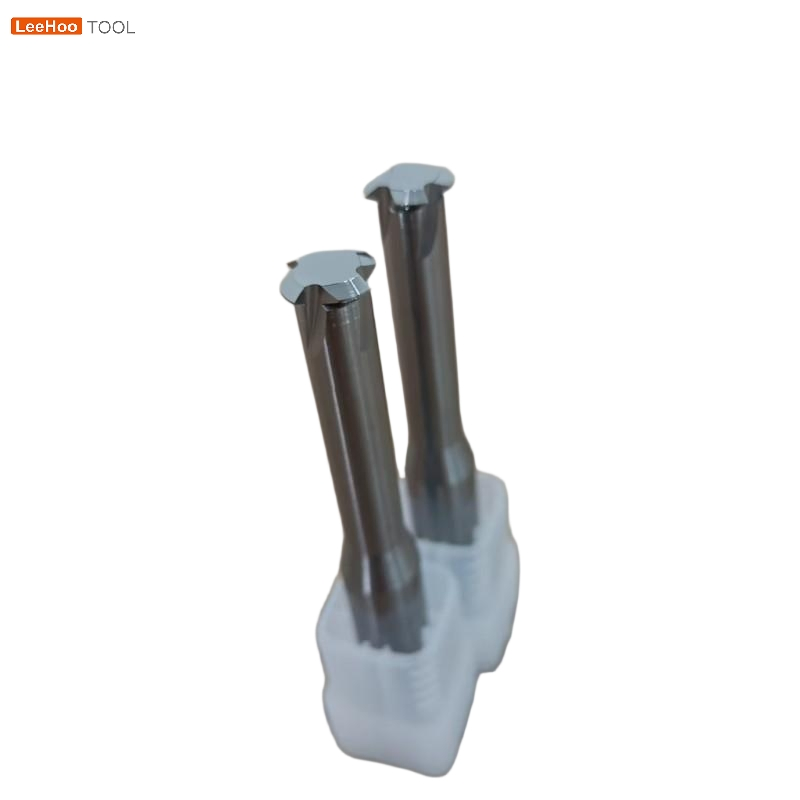
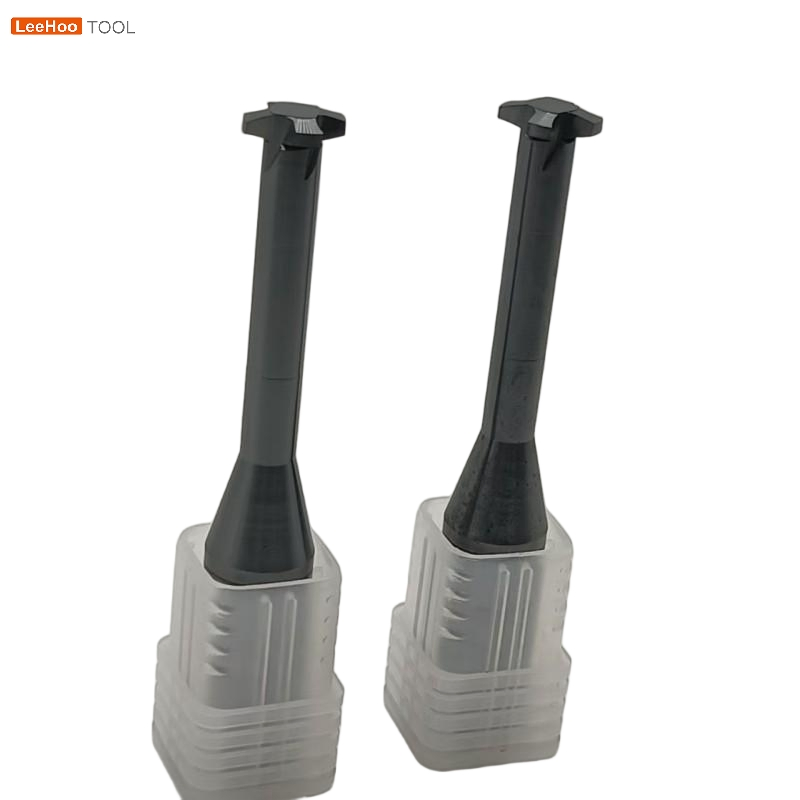
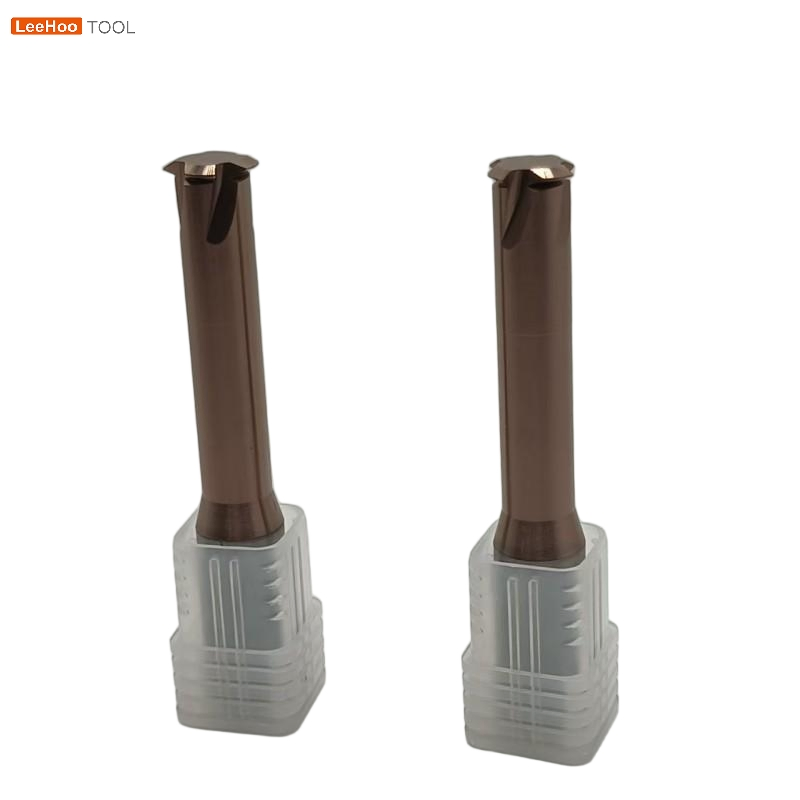
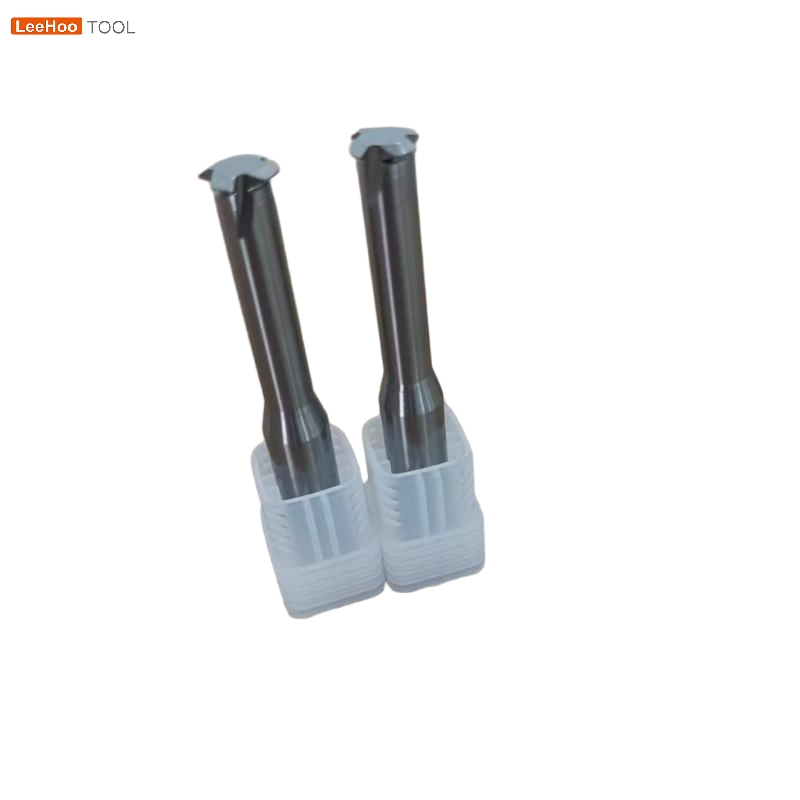
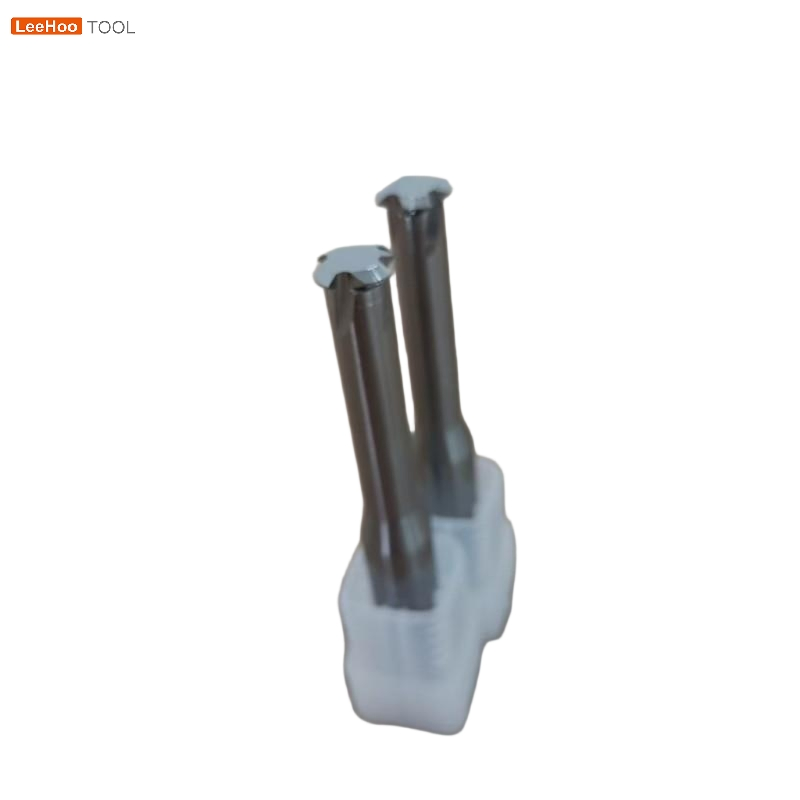
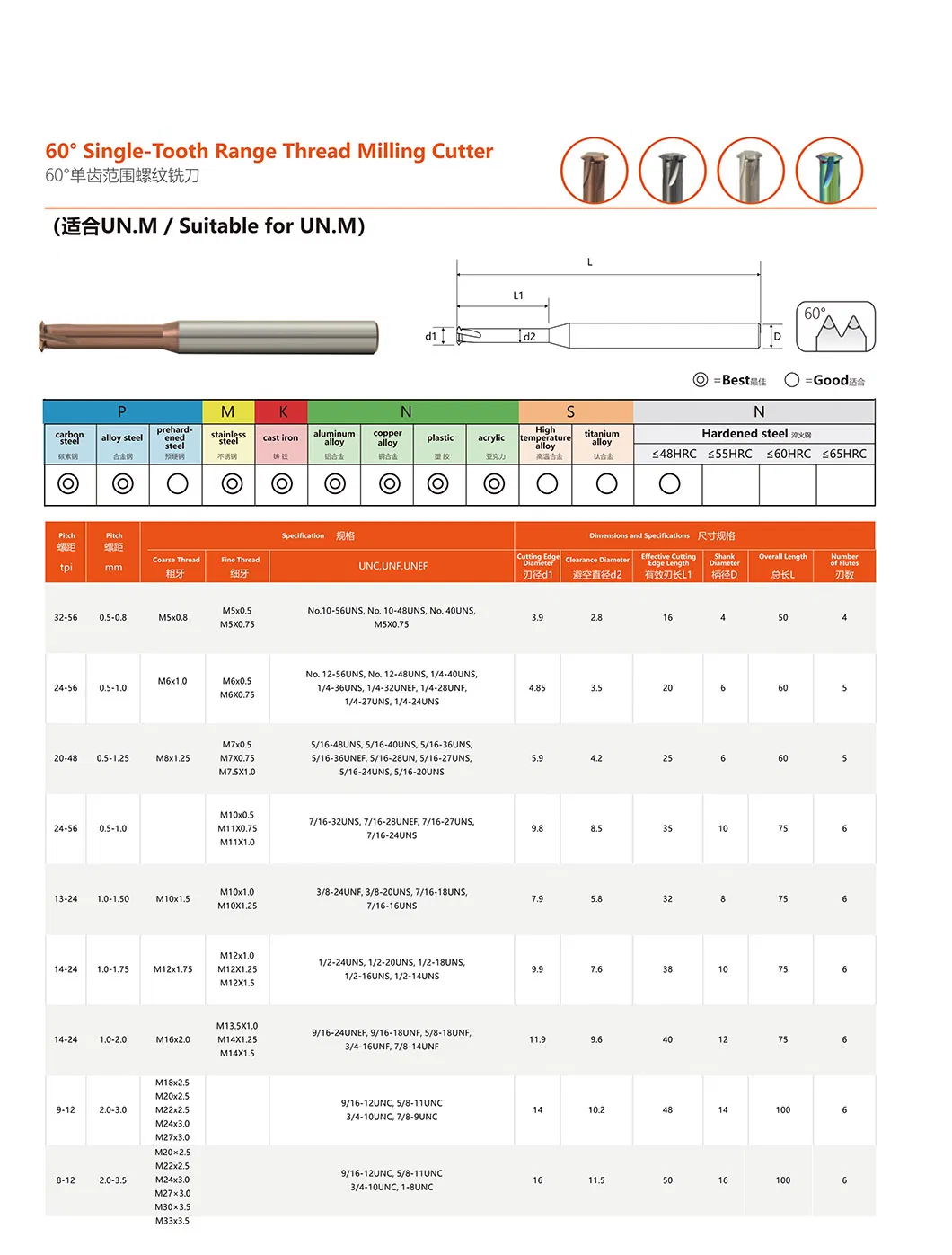
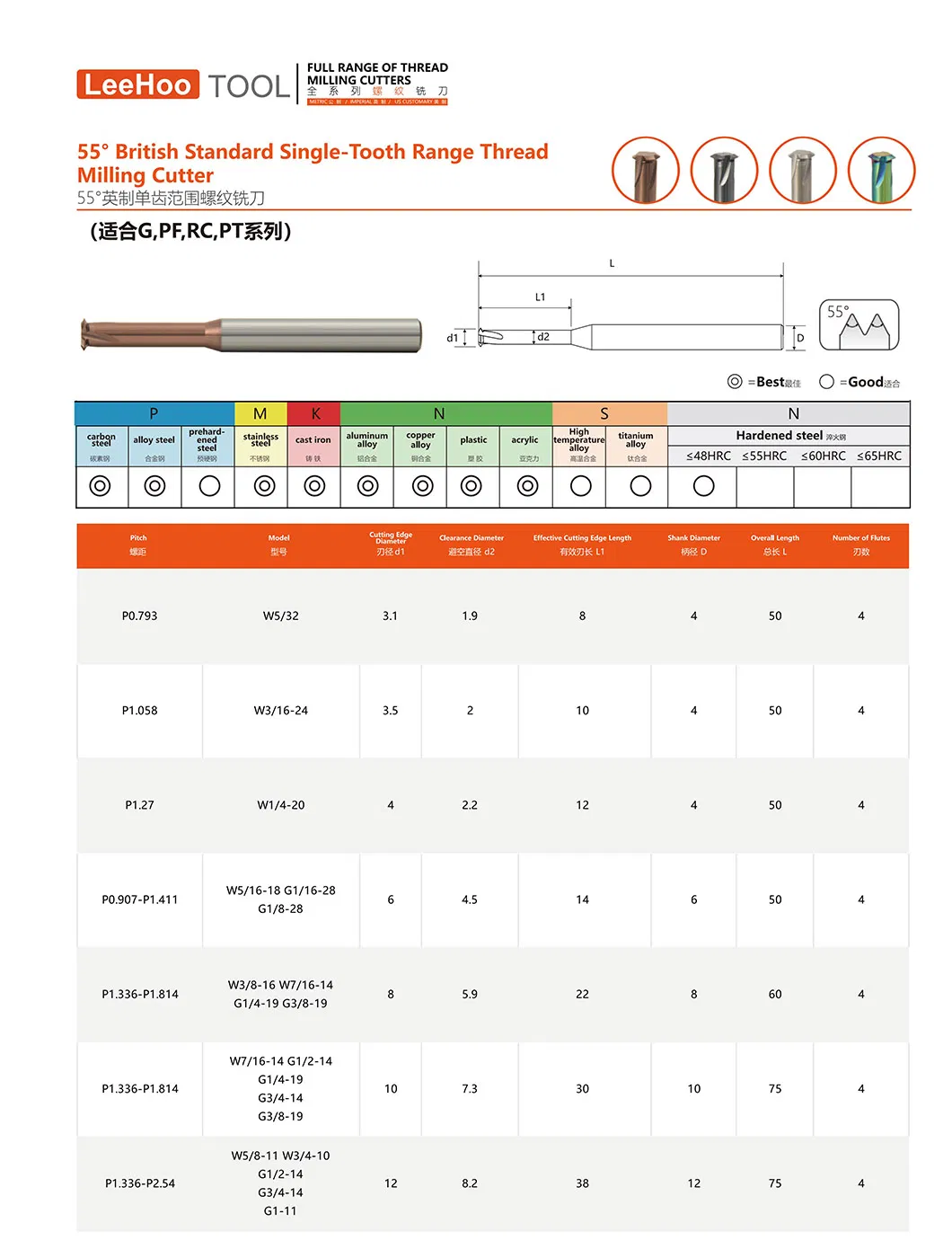
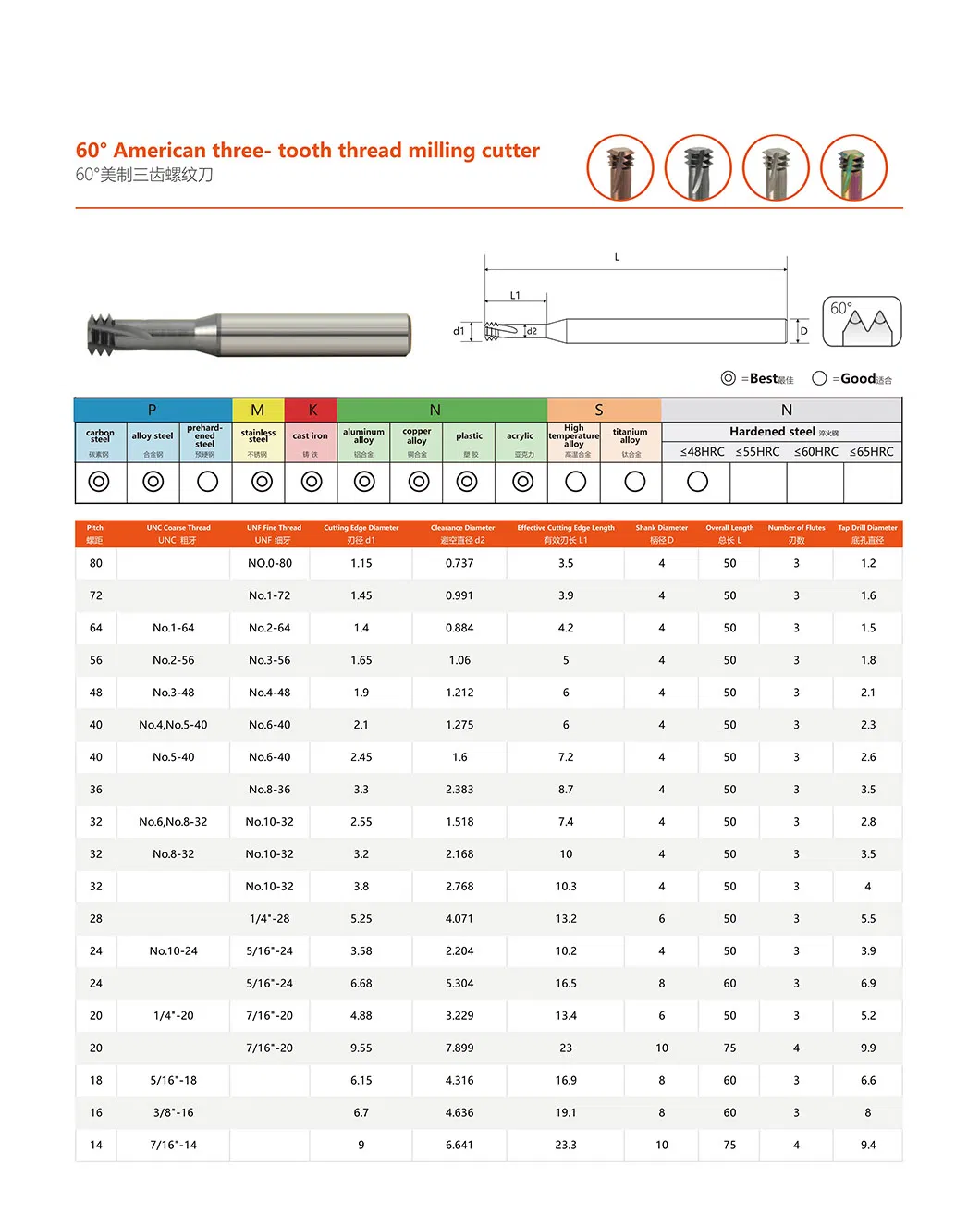
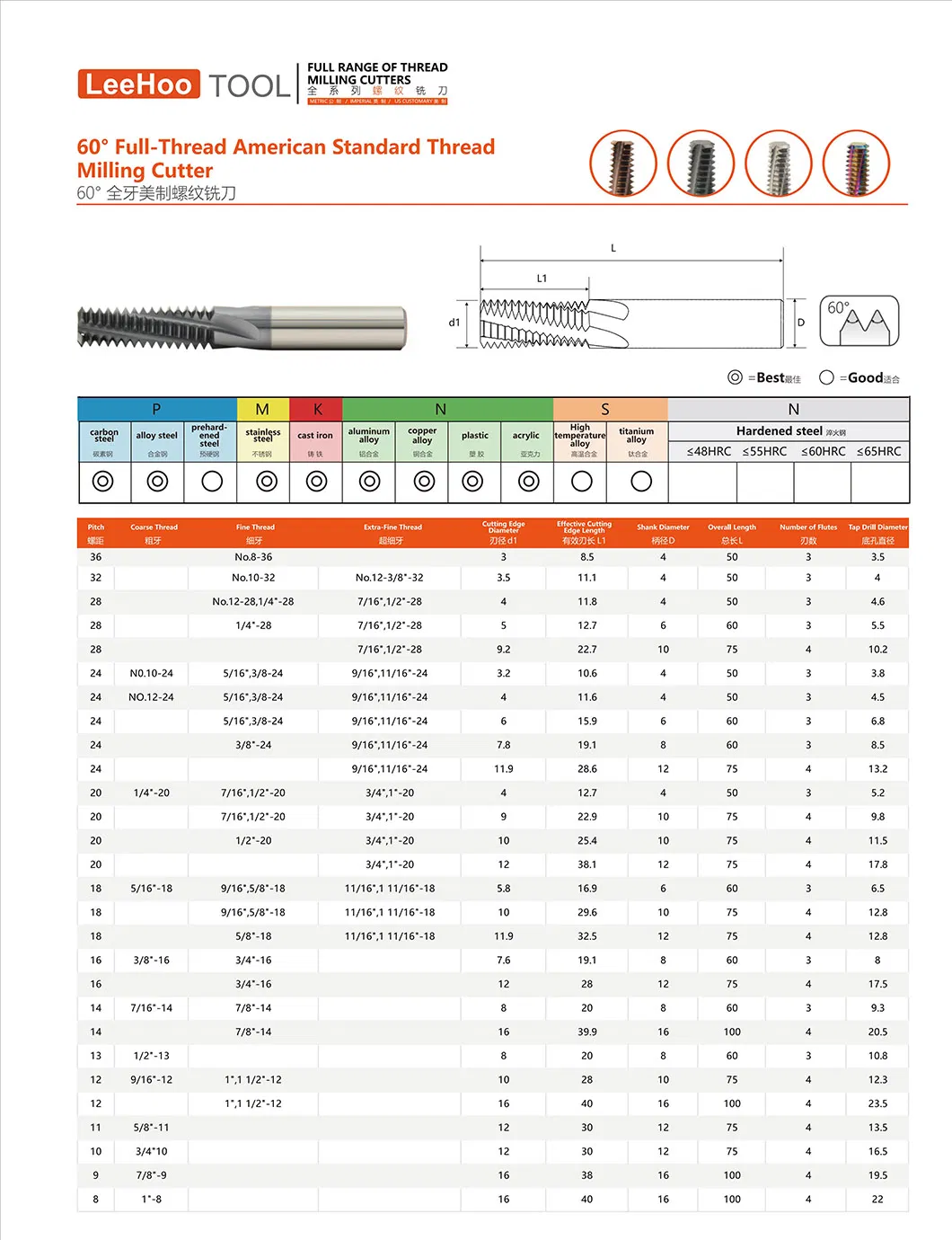
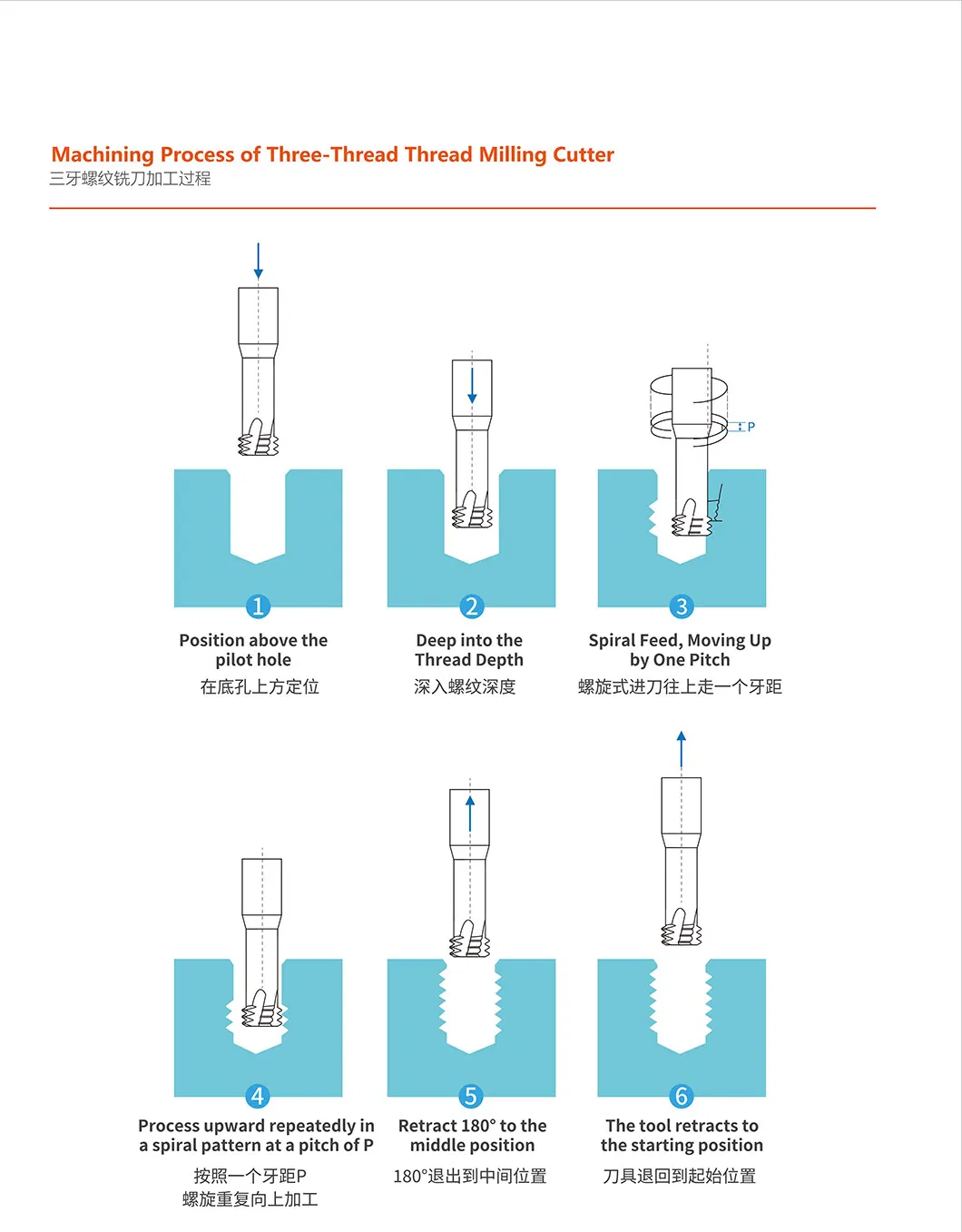
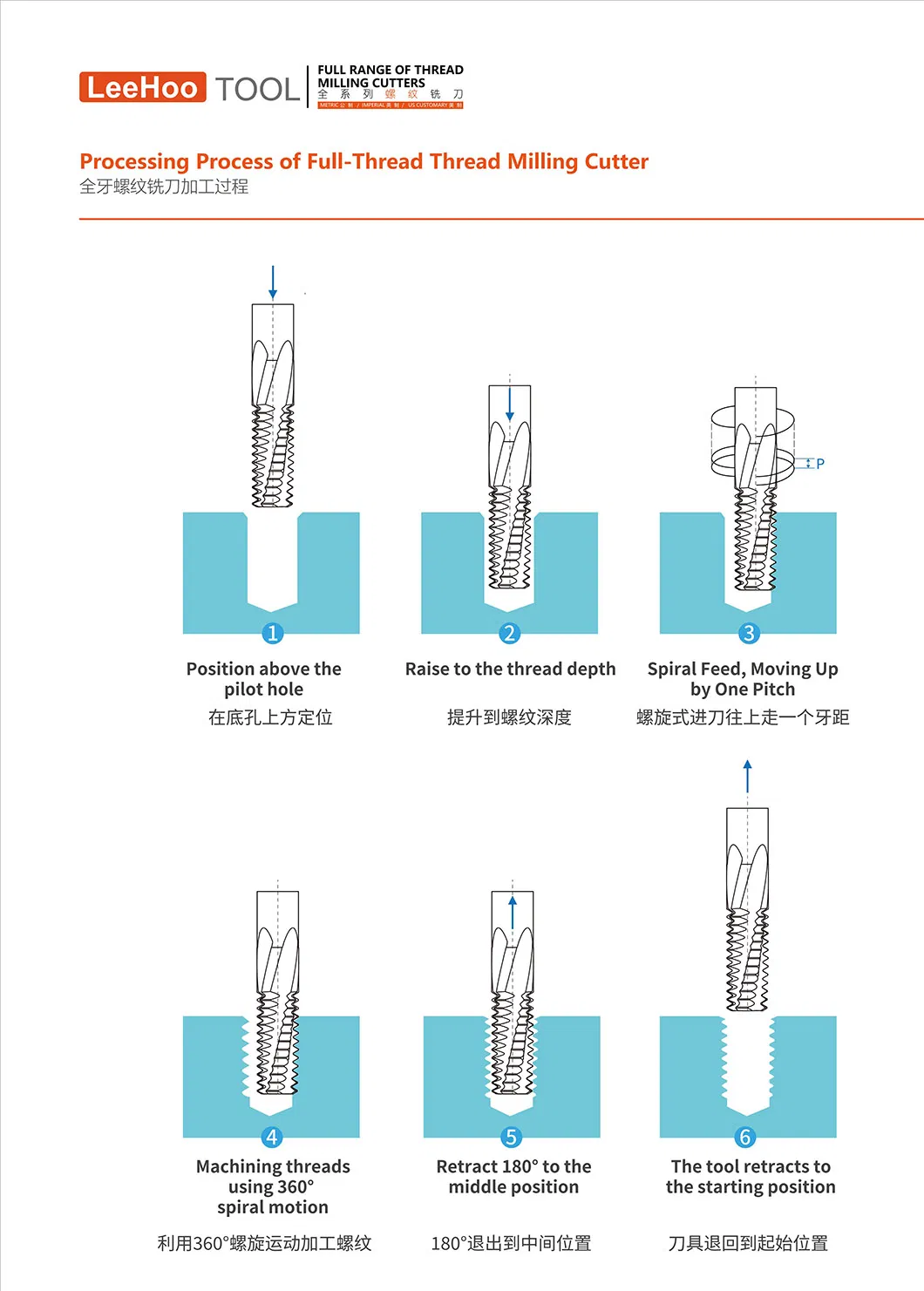
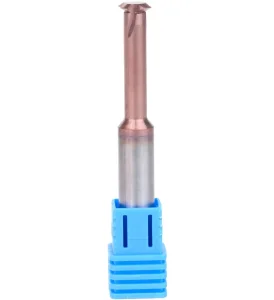
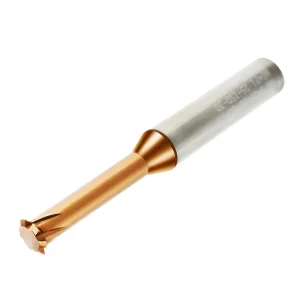
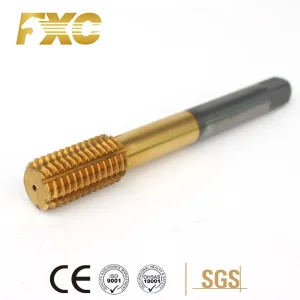
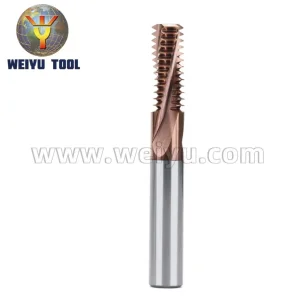
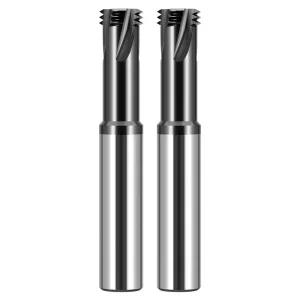
A thread milling cutter is a tool used to machine internal and external threads through milling. Different from traditional tapping and threading die cutting methods, it relies on the tool's rotation and the CNC system's interpolation motion to mill high-precision thread profiles on the workpiece surface.
I. Basic Introduction to Thread Milling Cutters
1. Structural Characteristics
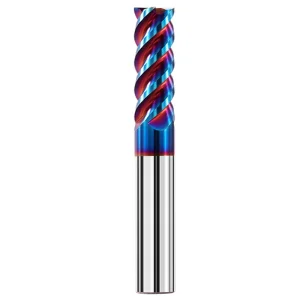
- Thread milling cutters are usually made of cemented carbide, and some are coated with TiN, TiCN, TiAlN, or other coatings to enhance wear resistance and high-temperature resistance, making them suitable for high-speed cutting.
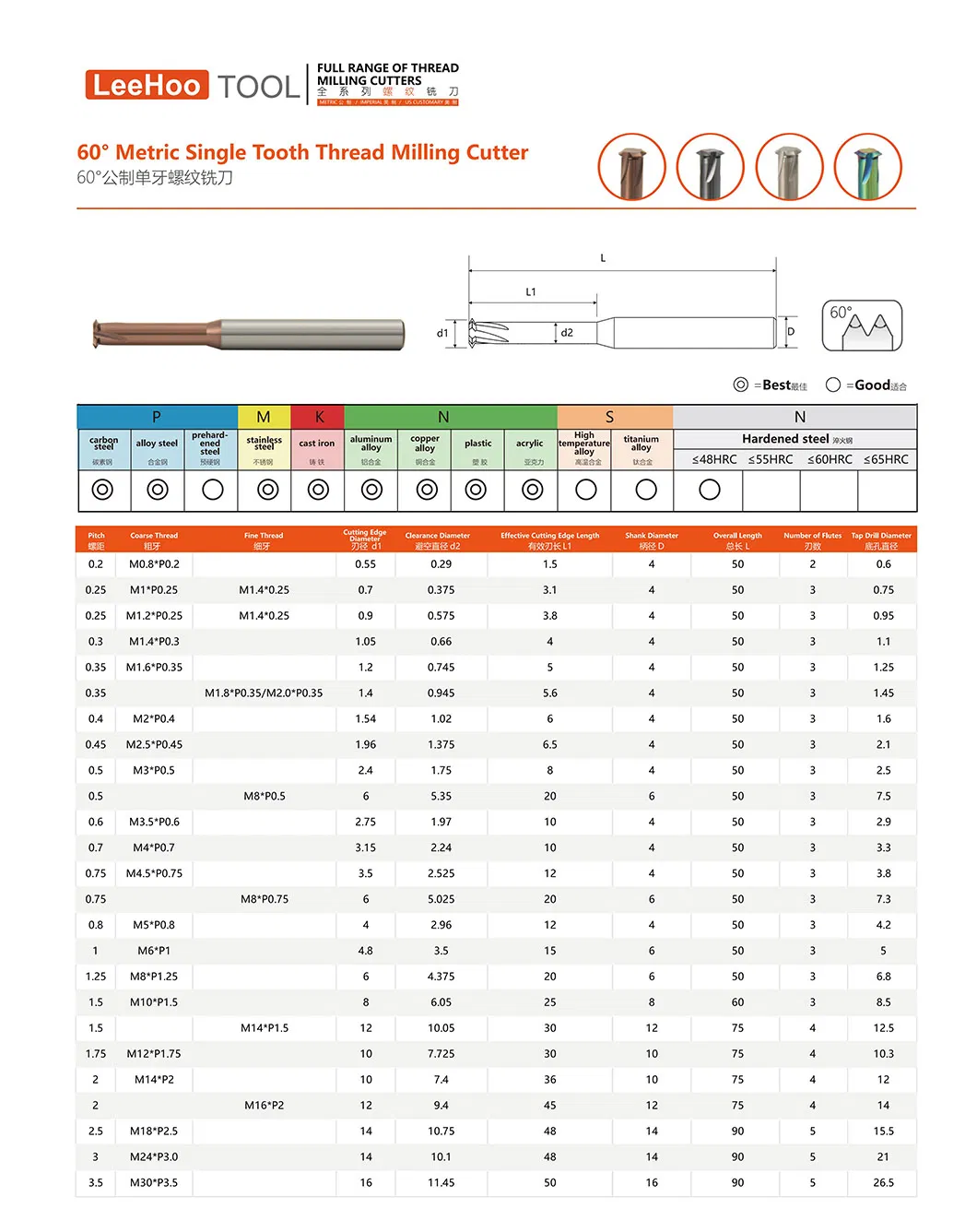
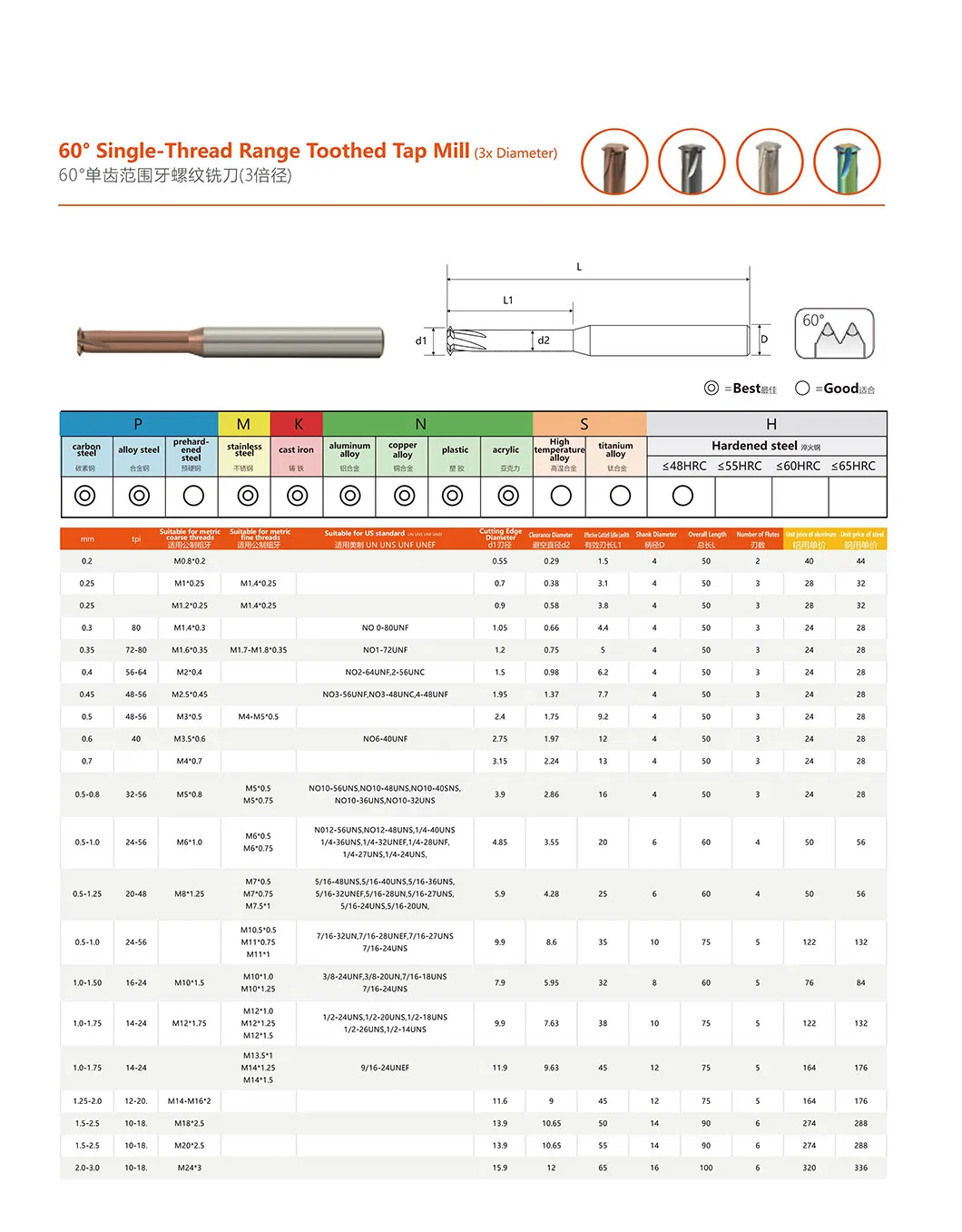
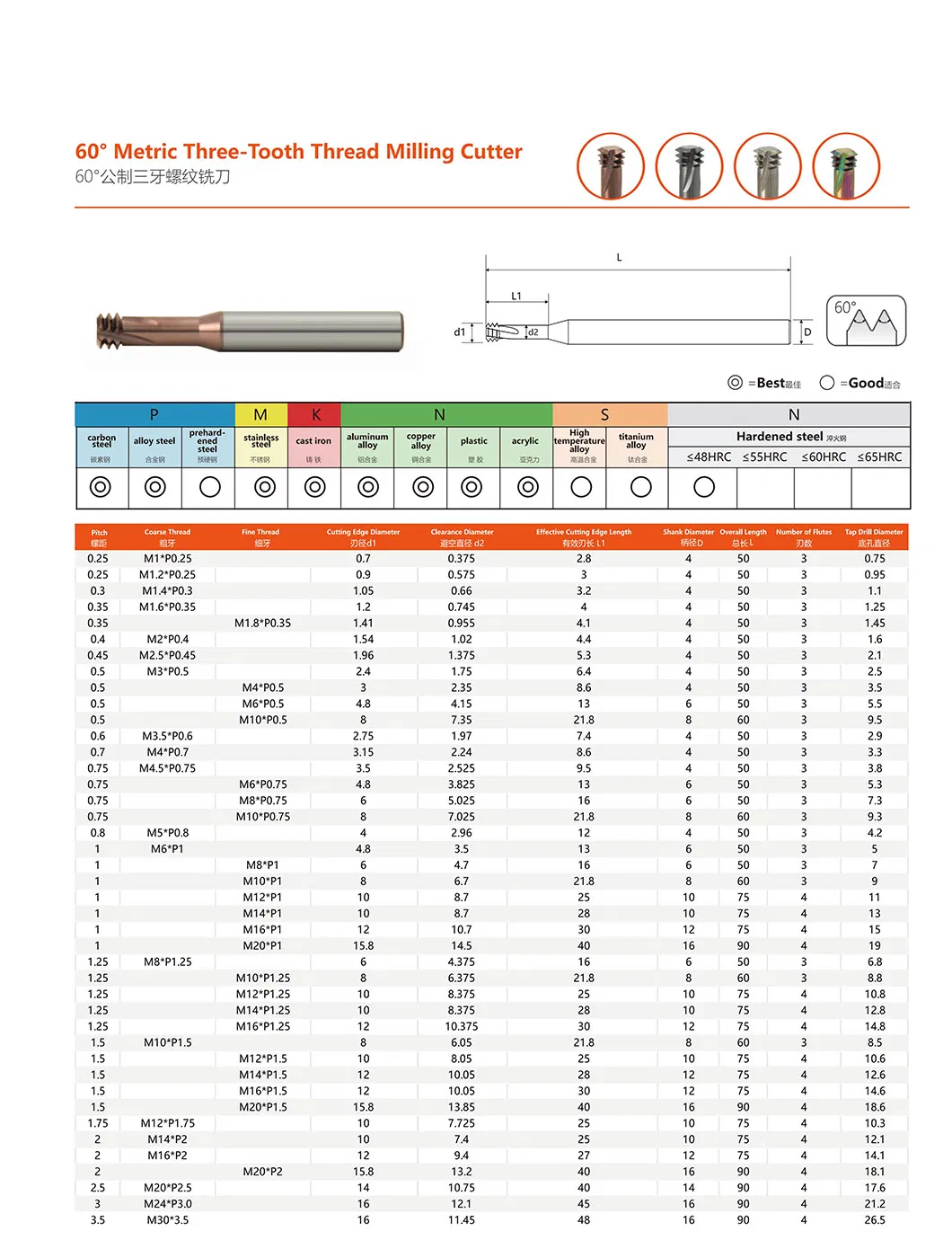
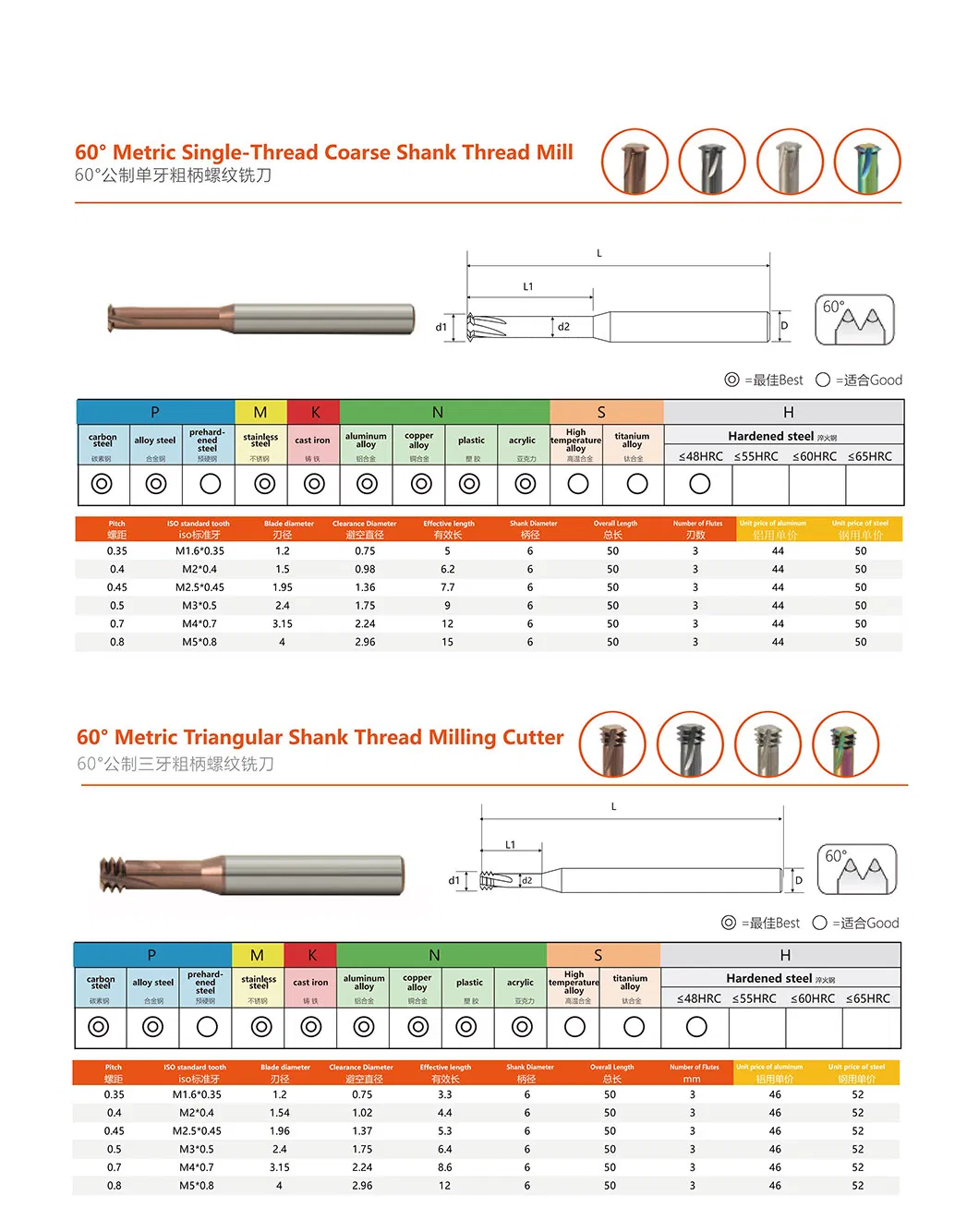
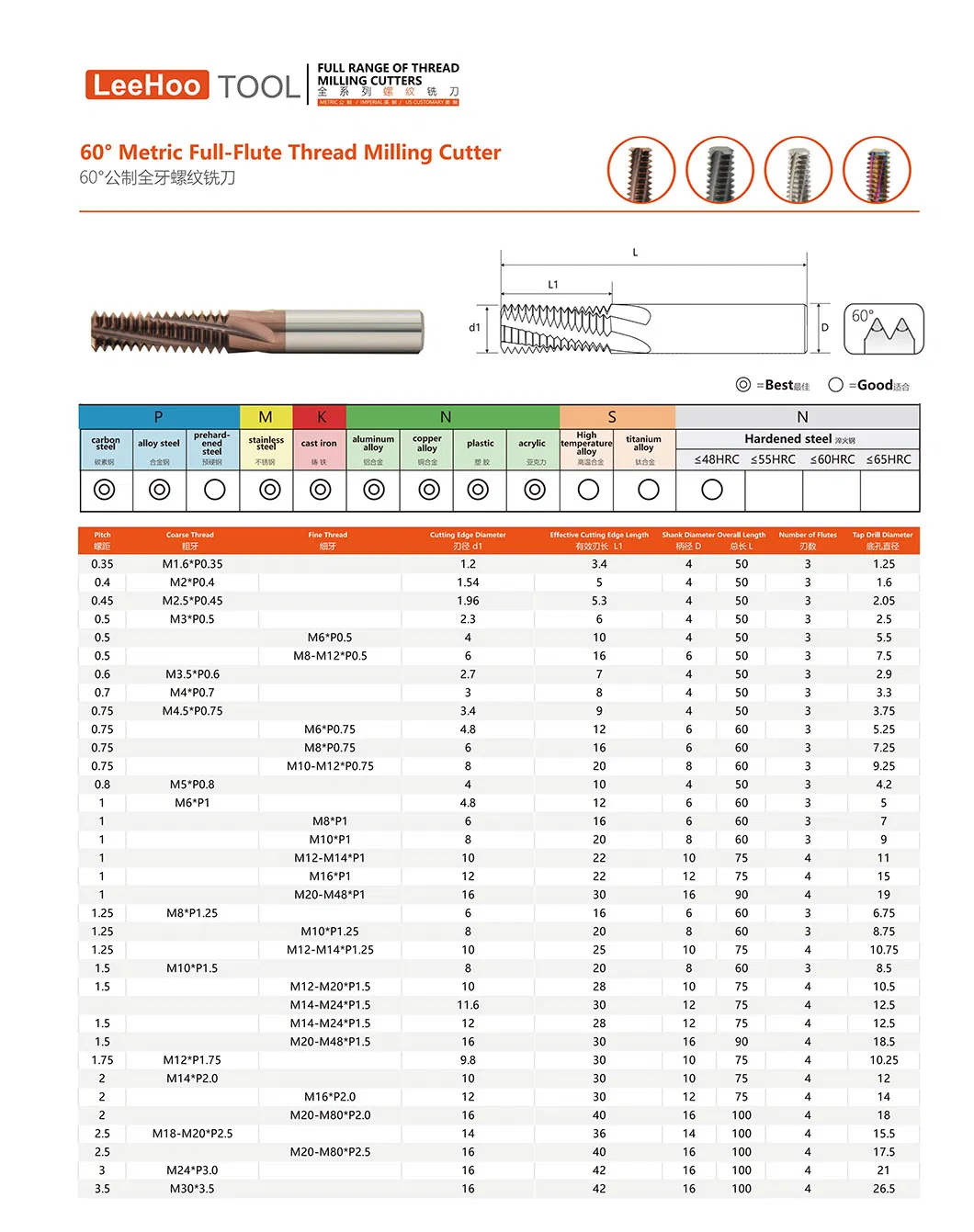
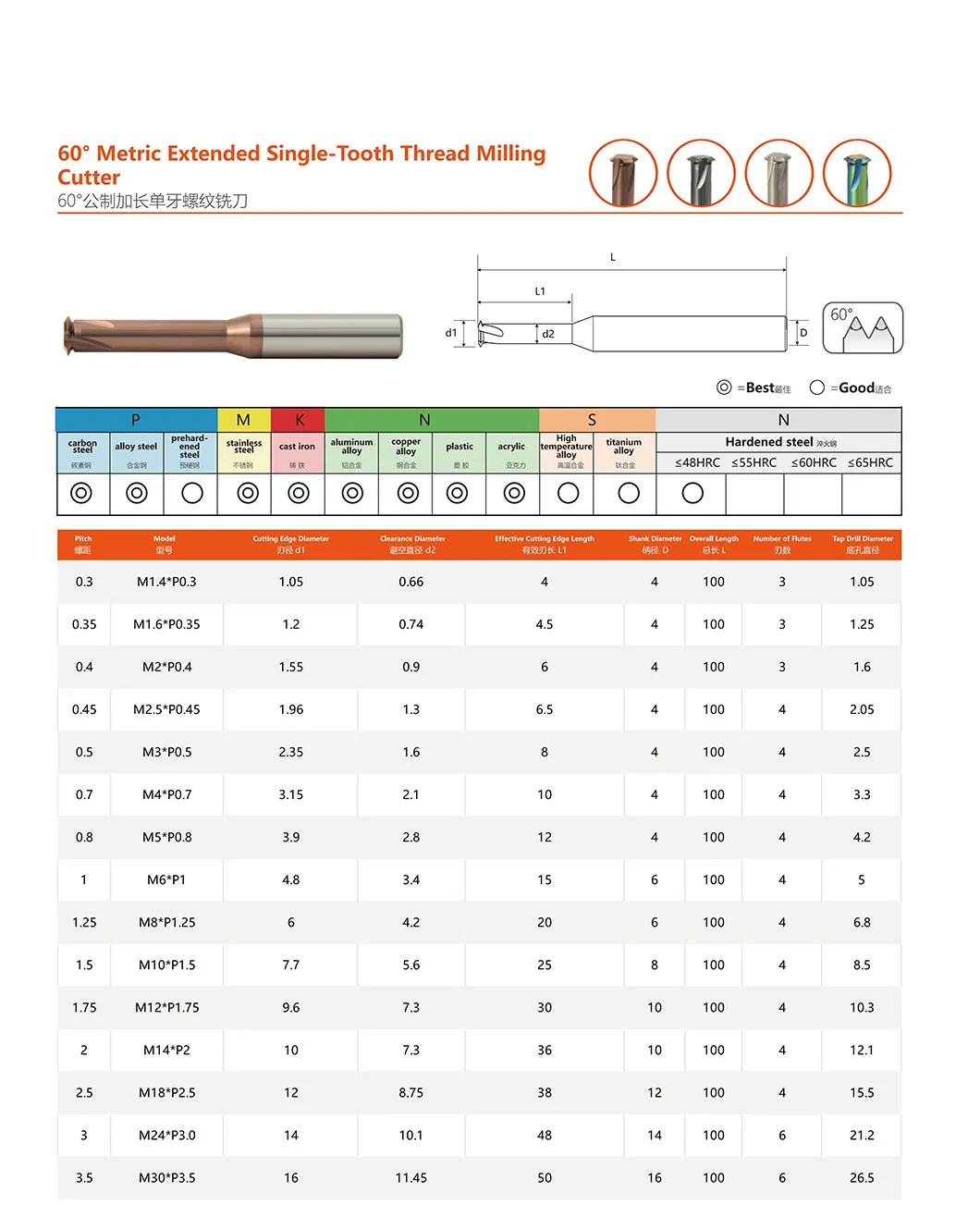
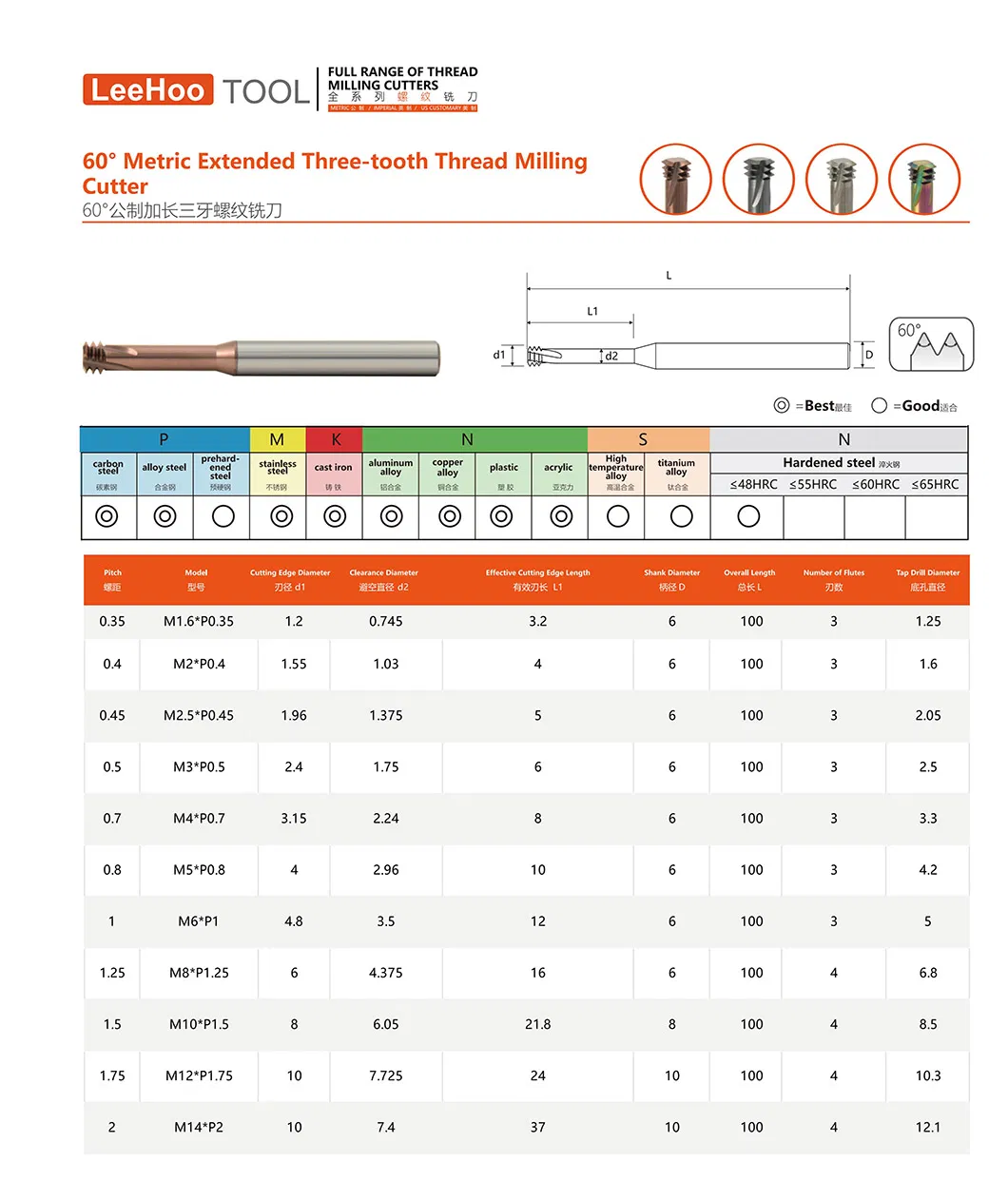
- According to processing types, they can be divided into internal thread milling cutters and external thread milling cutters; according to the number of teeth, they can be classified as single-tooth thread milling cutters and multi-tooth thread milling cutters. Single-tooth milling cutters have strong versatility and can process threads with different pitches; multi-tooth milling cutters have higher cutting efficiency and are suitable for mass production.
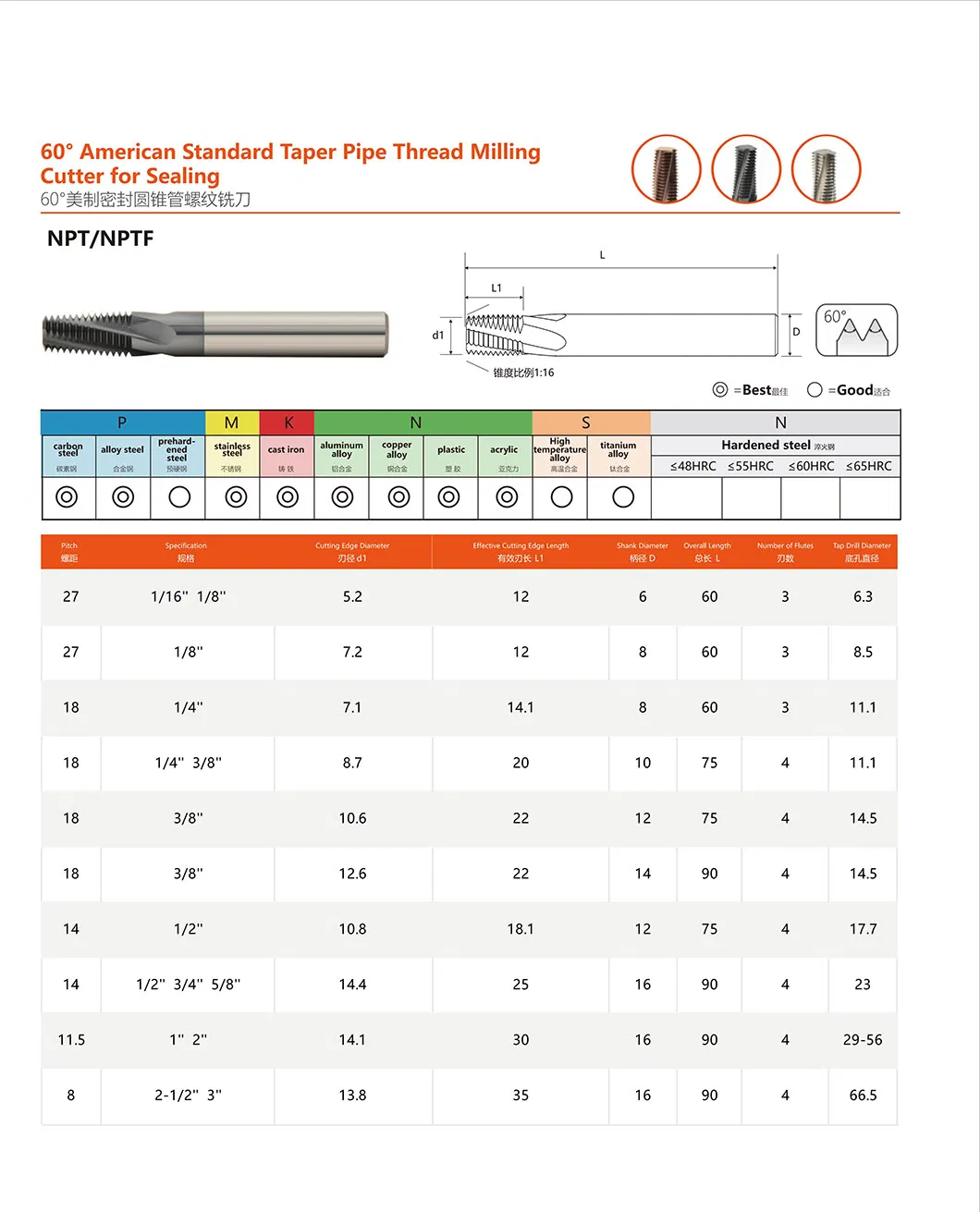
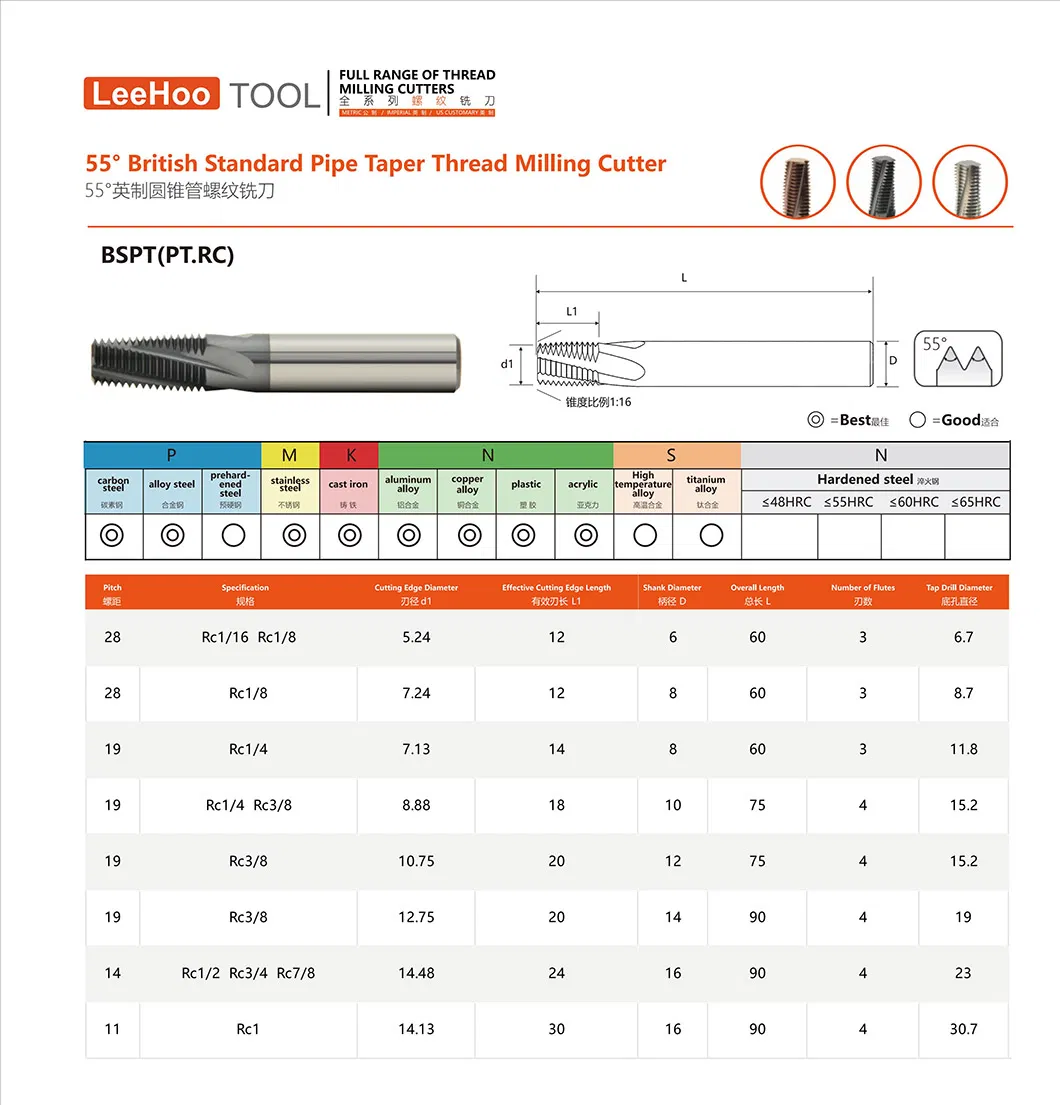
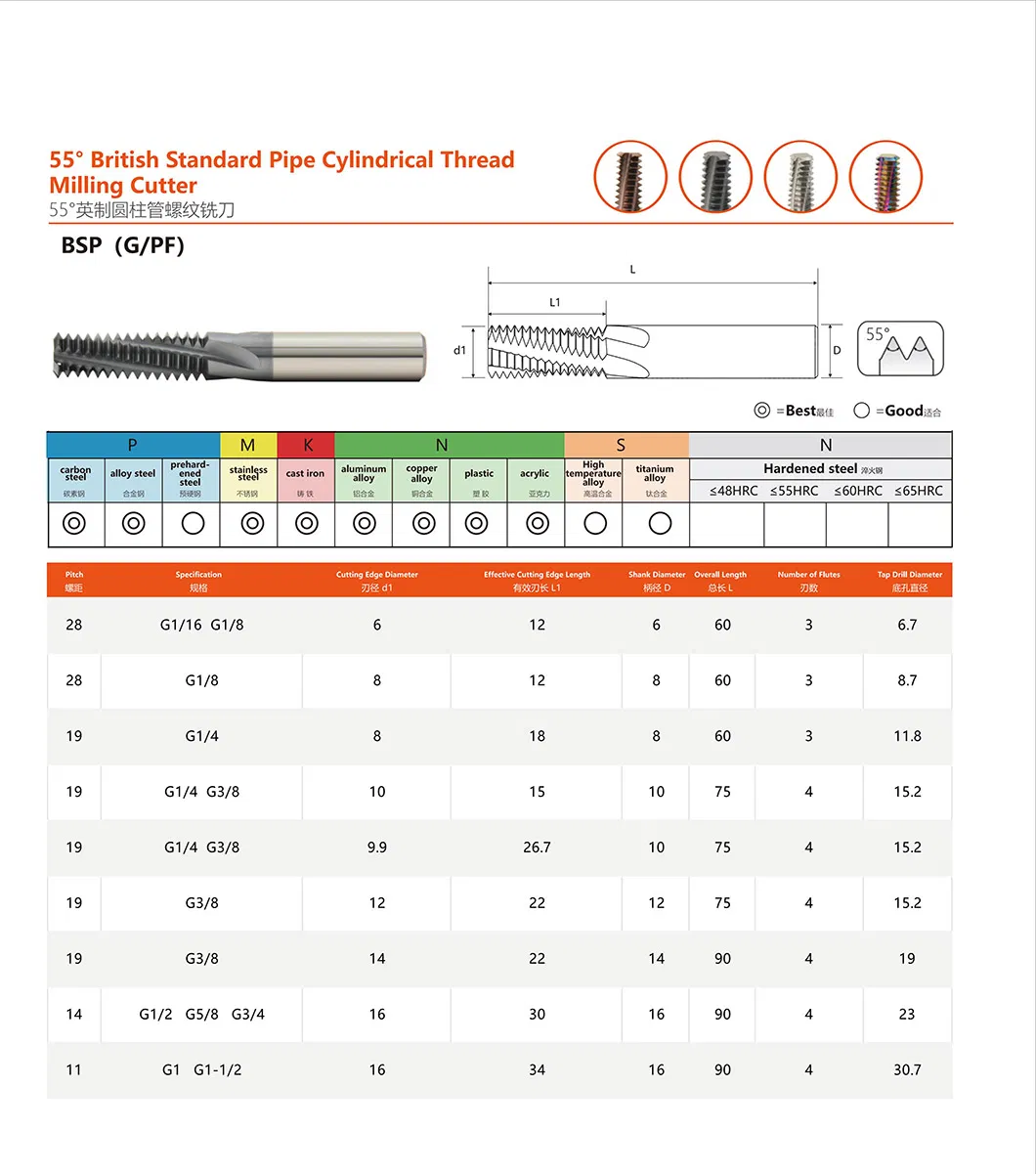
- The cutting edge design of the tool matches the thread profile, with common specifications such as metric threads, imperial threads, and pipe threads.
2. Processing Principle
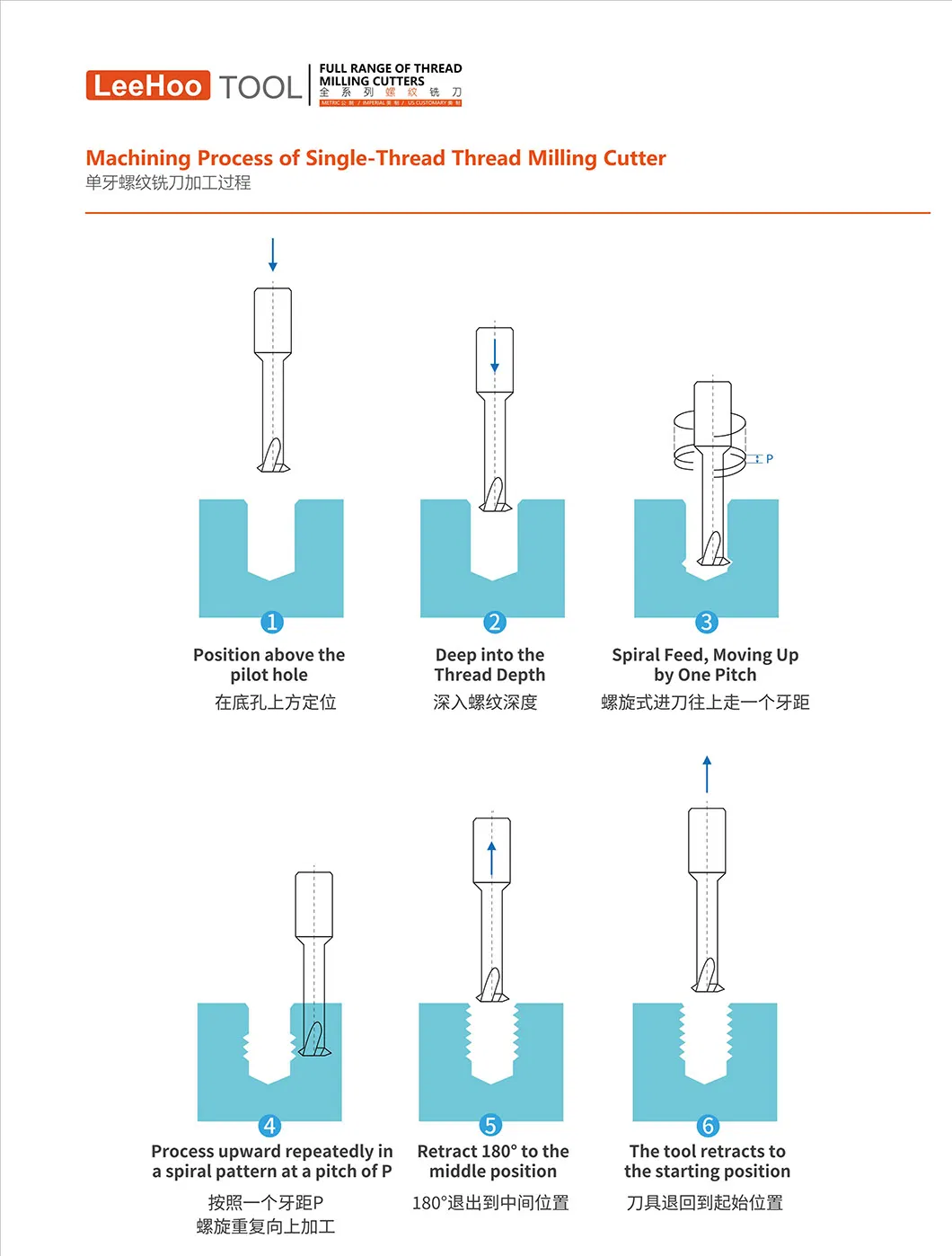
Thread milling belongs to 3-axis simultaneous CNC machining: the tool rotates around its own axis (main motion), while the workpiece or tool performs circular interpolation motion (forming the circular trajectory of the thread) and linear feed motion along the thread axis (controlling the pitch). A complete thread is milled through one or multiple passes.
II. Application Scenarios of Thread Milling Cutters
Thread milling cutters are mainly used in CNC milling machines, machining centers, and other equipment. Their applicable workpieces and processing requirements include:
1. Thread Processing of Difficult-to-Machine Materials
For materials with high hardness and toughness such as stainless steel, superalloys, titanium alloys, and composite materials, thread milling cutters exert smaller cutting forces, making them less prone to tool chipping and thread adhesion during processing, which is far superior to traditional taps.
2. Processing of Large-Diameter Threads
For large-diameter internal or external threads (e.g., above M30), tapping with taps results in high tool costs, difficult chip evacuation, and a high risk of tap breakage; thread milling cutters, however, can achieve efficient processing at a lower tool cost.
3. High-Precision Thread Processing
Fields such as aerospace, precision molds, and hydraulic equipment have extremely high requirements for thread dimensional accuracy and surface roughness. Through precise control by the CNC system, thread milling cutters can achieve micron-level processing accuracy with excellent thread consistency.
4. Thread Processing of Thin-Walled and Deformable Workpieces
Thin-walled workpieces are prone to deformation due to excessive cutting forces during processing. Thread milling cutters, with their small cutting forces, can effectively reduce workpiece deformation and ensure thread quality.
5. Processing of Non-Standard Threads or Special Profile Threads
For non-standard pitch and special profile threads, there is no need to customize special tools—only the processing program in the CNC system needs to be adjusted, offering strong versatility.
III. Advantages of Thread Milling Cutters
High Processing Precision and Good Surface Quality: The milling process is stable with small cutting forces, which can effectively reduce the surface roughness of threads. Additionally, the dimensional accuracy of threads is easy to control, and precision can be further improved by adjusting tool radius compensation.
Strong Tool Versatility and Lower Cost: A single-tooth thread milling cutter can process threads of different diameters in the same pitch series, eliminating the need to equip multiple tools for different diameters like taps. Moreover, cemented carbide thread milling cutters have a much longer service life than taps, reducing tool replacement frequency and costs.
High Processing Safety and Reduced Risk of Damage: Traditional taps, once broken during processing, are difficult to remove and may damage the workpiece. Even if a thread milling cutter chips, it will not get stuck in the workpiece. Furthermore, chip evacuation is smooth during milling, and chips can be fully removed with high-pressure cooling.
Wide Application Range: They can process both internal and external threads, as well as through-hole and blind-hole threads (blind-hole threads can be milled to the bottom of the hole, while taps are limited by the length of the flutes). They are also compatible with the processing of various materials.
High Processing Efficiency (for Multi-Tooth Milling Cutters): Multi-tooth thread milling cutters have more cutting edges, allowing for significantly higher feed rates. Compared to single-tooth milling cutters and taps, they offer obvious efficiency advantages in mass production.
Application of Carbide Tools
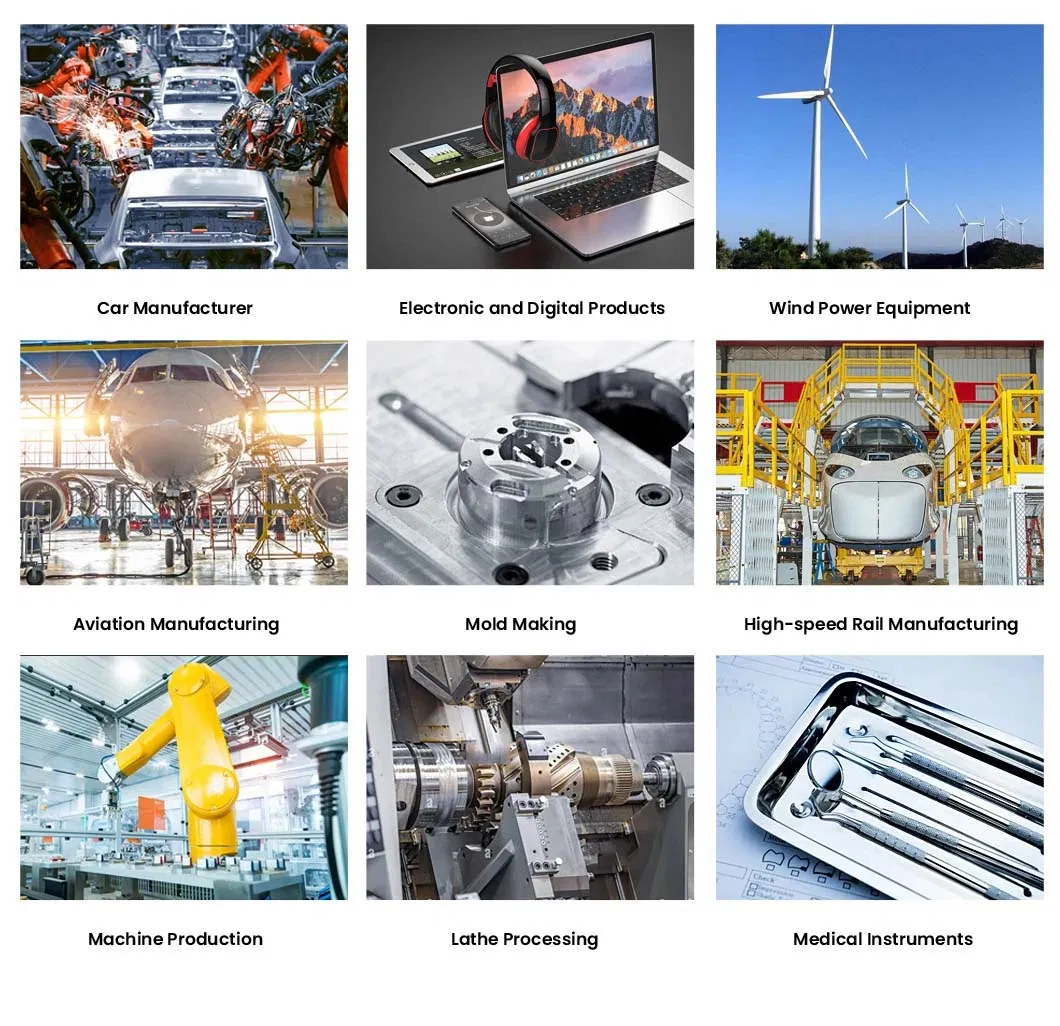
Carbide milling cutters are widely used in aerospace, medical equipment, mold manufacturing, automobile & general engineering.
Metal Processing
Milling cutters play an important role in the processing of metal materials. They can be used for cutting, slotting, boring, drilling, and other operations to manufacture various metal parts, such as gears, bearing seats, connectors, etc. Milling can be done at different angles and depths to obtain the desired shape and size.
Mold Manufacturing
Milling cutters are used to make molds, such as plastic injection molds, die-casting molds, and stamping molds. They can precisely cut the mold profile and details, ensuring the final product's accuracy and consistency.
Aerospace Industry
Milling cutters play a key role in manufacturing aircraft parts and aerospace devices. They can process complex surfaces and holes to ensure the accuracy and quality of parts while reducing weight and improving performance.
Automotive Manufacturing
Milling cutters are used to manufacture automotive engine parts, chassis components, and body structures. They can precisely cut engine blocks, crankshafts, brakes, and suspension parts to improve vehicle reliability and performance.
Energy Equipment
Milling cutters also have important applications in energy equipment manufacturing, such as the processing of turbomachinery components for power plants and nuclear power equipment.
Frequently Asked Questions
Q: When can I get the price?
We usually quote within 24 hours after we get your inquiry. If you urgently want the price, please specify your requirements in your inquiry so that we will prioritize it.
Q: How can I get a sample to check your quality?
After price confirmation, you can request samples to check and inspect our product quality.
Q: How long can I expect to get the sample?
After you pay the sample charge and send us confirmed details, the samples will be ready for delivery in 3-7 days. The samples will be sent to you via express and arrive in 3-5 workdays.
Q: How long does the standard production procedure take?
After you place an order, the production handling and manufacturing time is approximately 15 days.
Q: What machinery is utilized in your manufacturing process?
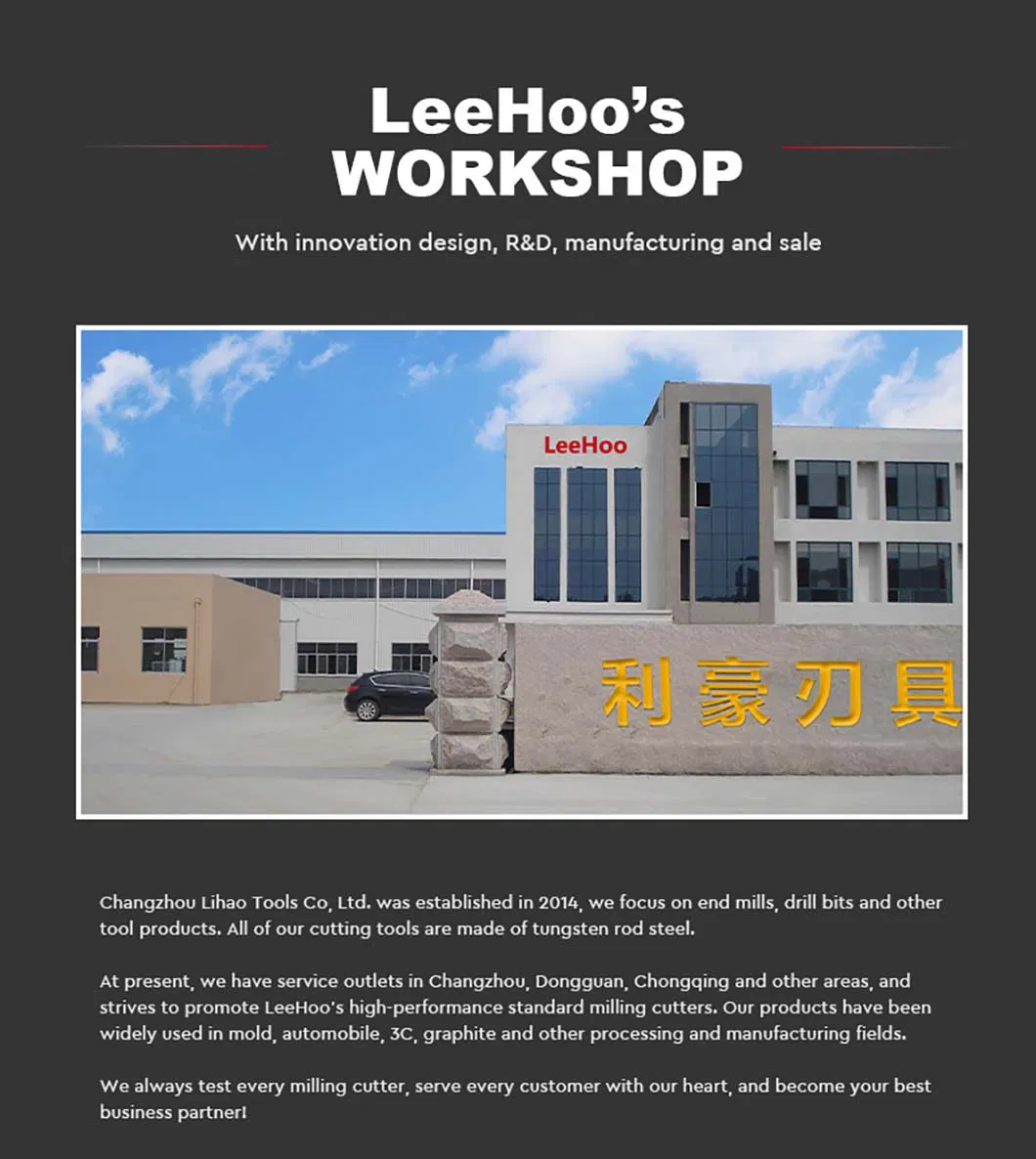
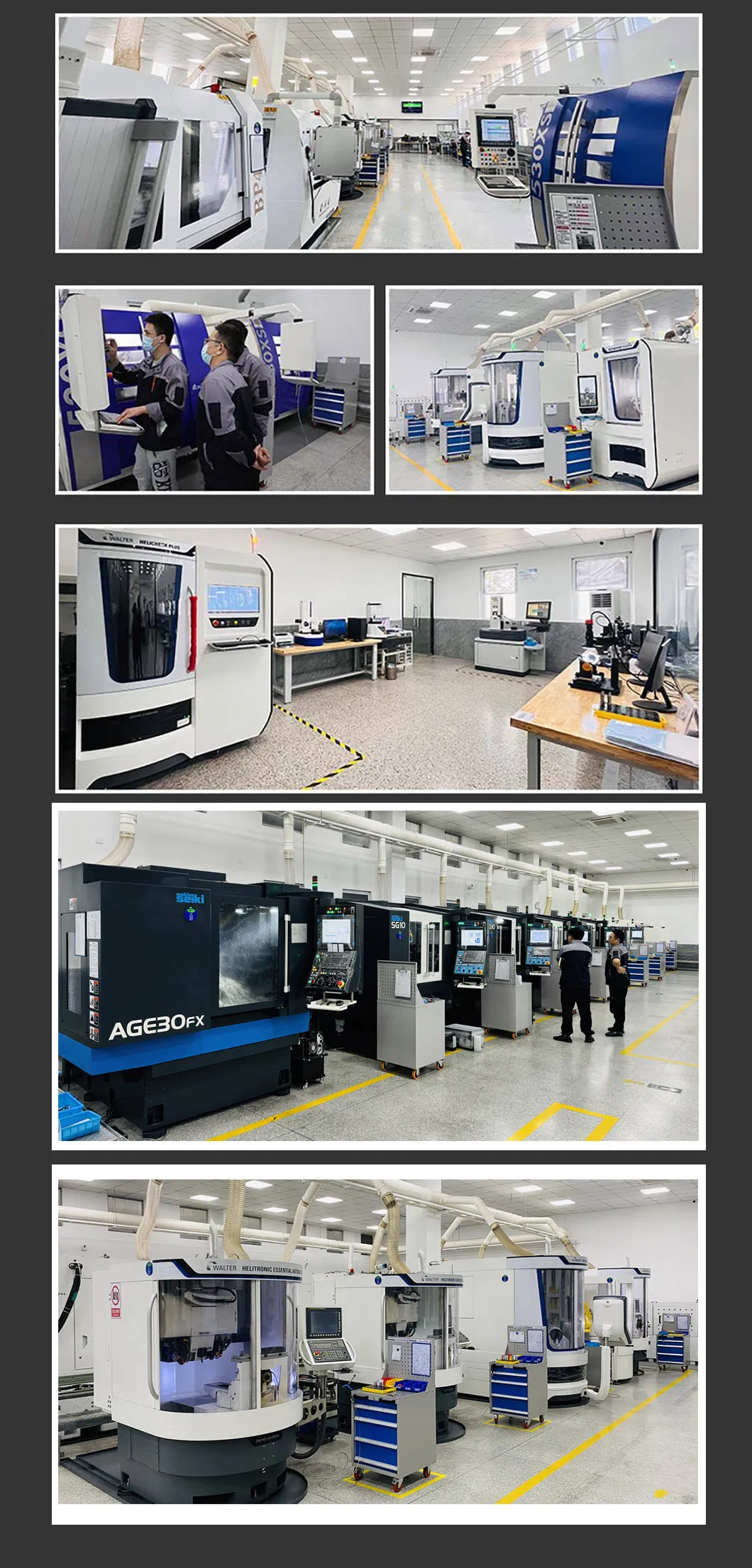
Our advanced machinery list includes MAKINO, WALTER, and ROLLOMATIC systems, totaling 25 sets.
Q: What is the inspection and quality testing process?
We pay strict attention to quality control. When raw materials arrive at our warehouse, we perform an initial inspection. During the production process, a secondary inspection is carried out, followed by a final 100% inspection prior to delivery.
 DentFix Tool