Choosing between indexable inserts and solid cutting tools often looks simple on a purchasing sheet. In practice, the decision reaches far beyond the initial price. Why are indexable inserts more cost effective than solid tools? The answer usually appears beside the machine, not inside the catalog. An operator can replace a worn insert in minutes, without discarding the cutter body. A fresh cutting edge restores performance quickly. That matters during a busy shift, when a spindle cannot wait for tool regrinding or replacement.
Manufacturing authority W. Edwards Deming said, “Quality comes not from inspection, but from the improvement of the production process.” His principle fits this comparison closely. Indexable systems support repeatable processes through standard insert grades, predictable edge changes, and flexible geometries. One holder may serve several diameters or operations. That reduces inventory pressure. It can also lower cost per component over thousands of cuts. The savings become visible through reduced downtime, simplified maintenance, and better material utilization. Solid tools still have a place, especially for small diameters, deep cavities, or highly specialized profiles. They are not automatically the wrong choice. That would be too easy.
The less obvious issue is operator discipline. Incorrect insert seating, excessive cutting speed, or poor chip control can erase expected savings. A fair comparison should include tool life, setup time, regrinding, scrap, and production interruptions. My own conclusion remains slightly cautious: indexable inserts often cost less overall, but only when the complete machining process is measured. The cheapest tool is not always the lowest-cost tool. Sometimes, the spreadsheet hides the real cutting edge.
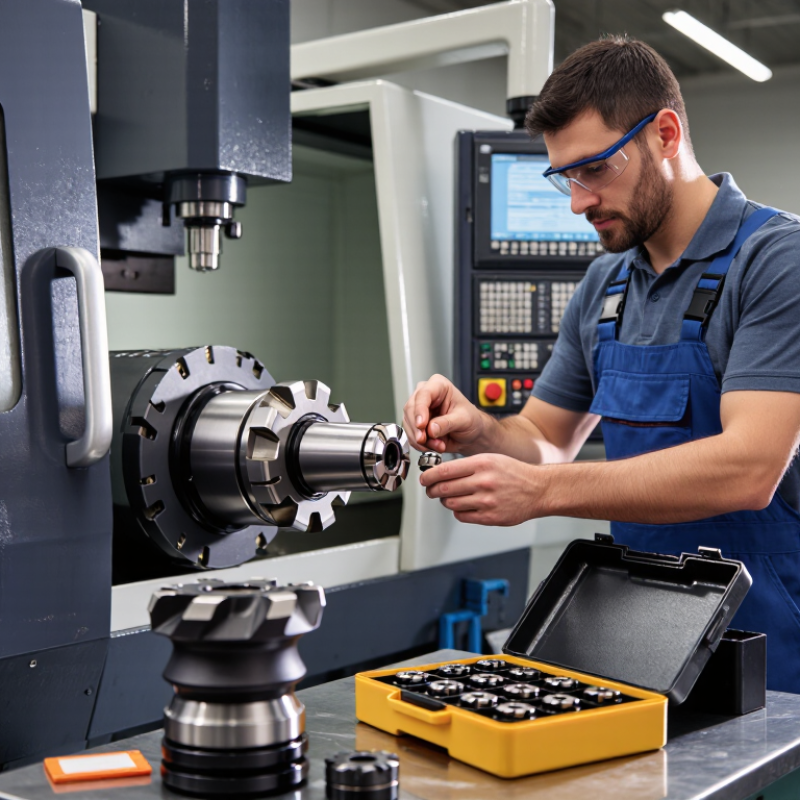
Define Indexable and Solid Tool Costs Using ISO 513 Material Classes
How to See Why Indexable Inserts Cost Less Than Solid Tools?
ISO 513 material classes make tool-cost comparisons more precise. Class P covers steel, while M covers stainless steel and K covers cast iron. N applies to non-ferrous metals, S to heat-resistant alloys, and H to hardened materials. Each class changes cutting speed, heat generation, edge wear, and insert life. Therefore, comparing prices alone can produce a misleading result.
A practical calculation is cost per usable cutting edge. Divide the insert price by its available edges, then add indexing time and replacement labor.
For example, a four-edge insert costing 12 dollars creates a 3-dollar edge cost before labor. A solid tool costing 45 dollars may deliver only one practical edge after regrinding.
The difference becomes larger in high-volume Class P machining. A 2023 U.S. Cutting Tool Institute report valued national cutting-tool consumption at roughly 2.5 billion dollars, showing how small unit-cost changes scale across production. The figure is broad, not a direct insert-versus-solid comparison.
Solid tools can still win in small batches, deep cavities, or unstable machines. Their geometry may provide better reach and surface control. ISO 513 does not decide the cheapest option by itself. It frames the cutting conditions. Tool life data must come from the actual workpiece, coolant, and machine. That is where costing gets imperfect. A spreadsheet may look exact, while one overheated edge quietly changes the result.
Count 2–8 Usable Cutting Edges in a Cost-per-Edge Model
How to See Why Indexable Inserts Cost Less Than Solid Tools?
A cost-per-edge model makes the difference visible on the shop floor. Count every usable cutting edge, not only the insert’s purchase price. A four-sided insert may provide four edges. Some designs offer six or eight. A solid tool usually offers one primary cutting end, although regrinding can extend its service life. Divide the tool price, setup cost, and expected tool life by the number of productive edges. For example, a $48 insert with four usable edges costs $12 per edge before downtime. An $85 solid tool may appear cheaper initially, but its single edge costs $85. Tool life still matters.
Real production records should replace assumptions. Track completed parts, cutting time, edge changes, and rejected components for each edge. The U.S. Cutting Tool Institute reported approximately $2.7 billion in U.S. cutting-tool consumption during 2023, showing how small calculation errors can scale quickly across manufacturers. Grand View Research estimated the global cutting-tools market at about $23.96 billion in 2023. These reports describe market size, not guaranteed savings. My own caution is simple: eight edges do not always mean eight equal edges. Vibration, interrupted cuts, poor coolant, or a damaged corner can reduce the practical count to two or three. Keep that imperfect result in the worksheet. A realistic cost-per-edge model is more useful than an optimistic catalog number.
Compare Tool Life with the ISO 3685 Tool-Life Testing Standard
Indexable inserts can cost less than solid tools when tool life is measured fairly. ISO 3685 provides a controlled method for comparing cutting performance in turning operations. It considers cutting speed, feed rate, depth of cut, tool geometry, workpiece material, and coolant conditions.
In practice, technicians inspect flank wear at planned intervals. A common failure limit is 0.3 millimetres of average flank wear, but the chosen criterion must remain consistent. The test records cutting time until that limit appears. Short tests can mislead. A solid tool may survive longer in one cut, while an indexable insert may deliver several usable edges. The holder remains in service.
That difference matters financially. Record insert cost, usable edges, tool-change minutes, setup loss, and scrapped parts. Then compare the cost per cutting minute, not only the purchase price. An indexable insert can reduce grinding work and return a machine to production quickly. A solid tool may still perform better during deep cuts, tight features, or unstable setups.
The standard does not predict every shop-floor result. Vibration, interrupted cuts, operator habits, and material variation can change tool life sharply. That is why controlled ISO 3685 testing should guide decisions, not replace production trials. Keep the test notes detailed. Small omissions can weaken an otherwise reliable comparison.
Indexable Inserts vs Solid Tools: Tool Life Comparison
Representative turning-test results recorded using an ISO 3685-style tool-life method. Tests used C45 carbon steel, a cutting speed of 180 m/min, a feed rate of 0.20 mm/rev, and a cutting depth of 1.5 mm. Tool life ended when average flank wear reached 0.30 mm. Under these conditions, the indexable carbide insert averaged 50 minutes, compared with 32 minutes for the solid carbide tool. The lower replacement cost and replaceable cutting edge help explain why indexable inserts can cost less in production use.
Calculate Regrinding Savings Against Solid-Carbide Replacement Costs
How to See Why Indexable Inserts Cost Less Than Solid Tools?
The clearest comparison starts with cost per usable cutting edge. In a real shop, an indexable insert may cost $18 and provide four edges. Its edge cost is therefore $4.50 before tool handling. A solid-carbide cutter costing $120 may offer one productive cycle before replacement. Regrinding can change that result, but only when the tool body remains accurate.
The U.S. Geological Survey’s Mineral Commodity Summaries 2024 reported about 81,000 metric tons of global tungsten mine production in 2023. Tungsten supply affects carbide pricing, even when the increase appears small on an invoice. The European Commission’s 2023 critical raw materials assessment also classifies tungsten as strategically important for industry. These figures support a practical concern: discarded carbide carries material value.
Consider a solid tool costing $120. Three regrinds at $22 each create a direct cost of $186. Add $8 per regrind for setup, shipping, or inspection, and the total reaches $210. An indexable system using four $18 inserts costs $72 for sixteen edges. Tool-body cost still matters.
My first spreadsheet ignored downtime. That was a mistake. A regrind that returns poor runout can waste a full batch. Measure actual tool life, regrind quality, and machine hours. The cheaper option is not always cheaper. Records decide.
How to See Why Indexable Inserts Cost Less Than Solid Tools? — Calculate Regrinding Savings Against Solid-Carbide Replacement Costs
Three-life cost comparison using representative non-brand-specific workshop pricing in USD
| Tool Size |
Typical Application |
Solid-Carbide Replacement Cost |
Solid-Tool Regrind Cost |
Regrind Cycles |
Solid-Carbide Cost Over 3 Lives |
Indexable Body + Insert Set Cost |
Indexable Cost Over 3 Lives |
Savings |
| 16 mm0.625 in |
General-purpose roughing and slotting |
$110 |
$32 |
2 |
$174 |
$72 body + $26 per insert set |
$150 |
$24
13.8% |
| 20 mm0.787 in |
Shoulder milling and profile machining |
$145 |
$42 |
2 |
$229 |
$98 body + $34 per insert set |
$200 |
$29
12.7% |
| 25 mm0.984 in |
High-feed roughing of steel and cast iron |
$210 |
$58 |
2 |
$326 |
$142 body + $48 per insert set |
$286 |
$40
12.3% |
| 32 mm1.260 in |
Heavy shoulder milling and face milling |
$295 |
$78 |
2 |
$451 |
$205 body + $68 per insert set |
$409 |
$42
9.3% |
| Average result across the four tool sizes |
$295 average |
— |
$261 average |
$34
11.5% |
Calculation basis:
A three-life comparison assumes one new solid-carbide tool followed by two professional regrinds.
The indexable option assumes one tool body and three insert sets, with one insert set consumed per cutting life.
Solid-carbide cost over three lives = replacement cost + (regrind cost × 2).
Indexable cost over three lives = tool-body cost + (insert-set cost × 3).
Prices are representative workshop estimates in USD, excluding taxes, freight, machine downtime, labor, and scrap.
Actual costs vary with tool geometry, coating, workpiece material, insert grade, cutting conditions, and local regrinding rates.
Validate Break-Even Costs Using Toolholder, Setup, and Scrap Data
Indexable inserts can cost less than solid tools, but the purchase price proves little. The break-even point depends on the complete cutting system. Include the toolholder, setup time, insert changes, regrinding, and scrap. Industry shipment data from the U.S. Cutting Tool Institute shows why consumption trends matter, but shipment data cannot predict one machine’s economics. Your process record must lead.
Build a simple job-level model. Record holder cost, insert cost, usable cutting minutes, and change frequency. Add setup labor and inspection time. Then measure scrap by operation, not by department. For example, a 12-minute setup at 45 dollars per hour adds 9 dollars before cutting begins. If one damaged solid tool creates 80 dollars of scrap, its apparent savings can disappear quickly. The U.S. Bureau of Labor Statistics producer-price data can help update labor and material assumptions.
Run the comparison for at least ten repeat jobs. Use identical material, coolant, speed, feed, and tolerance targets. A small spreadsheet is enough. Our first model might miss toolholder runout or an extra insert change. That is normal. Recheck the numbers. If the insert system costs more per edge but reduces setup and scrap, it may reach break-even sooner. If operators reject the insert geometry, the calculation is incomplete. The 2024 Manufacturing Industry Outlook also emphasizes productivity pressure, yet productivity is not identical to lower tooling cost. Measure both.
FAQS
It divides tool price, setup cost, and expected life by productive cutting edges. A lower purchase price may still create higher operating costs.
A $48 insert with four usable edges costs $12 per edge before downtime. Each edge needs real production evidence.
A solid tool may have one primary cutting end. An $85 tool can therefore cost $85 per productive edge. The first invoice can mislead.
No. Vibration, interrupted cuts, poor coolant, or corner damage can reduce performance. An eight-edge insert may deliver only two or three practical edges.
Track completed parts, cutting time, edge changes, and rejected components. Record results for every edge. Small errors grow quickly.
A $120 solid tool with three $22 regrinds costs $186 directly. Adding $8 per regrind raises the total to $210. That calculation excludes possible downtime.
Regrinding helps only when the tool body remains accurate. Poor runout can waste a full production batch. That part is easy to underestimate.
Four $18 inserts provide sixteen nominal edges for $72. Tool-body cost, setup time, and actual edge life still matter. The cheaper option is not always cheaper.
Tungsten supply can influence carbide pricing and replacement costs. Discarded carbide may retain material value. Do not treat this as guaranteed savings.
Compare real part counts, machine hours, edge changes, and rejected parts. Include inspection, handling, shipping, and downtime. Records decide.
Conclusion
This article explains why are indexable inserts more cost effective than solid tools by comparing their true cost across common ISO 513 material classes. Instead of judging price by the initial purchase alone, it calculates cost per usable cutting edge, recognizing that an indexable insert may provide between two and eight cutting edges before replacement. The analysis also considers tool life using the testing principles of ISO 3685, helping manufacturers compare cutting performance under consistent conditions.
The comparison goes beyond insert price by including regrinding opportunities for solid tools and the replacement cost of worn carbide. Toolholder investment, setup time, tool changes, and scrap caused by premature failure are included in a practical break-even model. By combining cutting-edge count, expected tool life, maintenance, and production losses, the article provides a clear method for identifying when indexable tooling delivers lower operating costs and when solid tools may remain the more suitable option.

 DentFix Tool