Choosing between carbide and ceramic cutting tools is not a simple contest between toughness and heat resistance. It is a decision shaped by workpiece material, machine rigidity, cutting speed, and whether the cut is continuous. A carbide insert may tolerate interruptions and less rigid setups. A ceramic tool can excel in hot, stable cuts, especially when machining suitable hardened alloys or cast irons. But the wrong choice can mean chipped edges, rough surfaces, or wasted inserts.
Machining researcher Dr. Tony Schmitz studies how cutting conditions affect machining performance. The line below is an editorial paraphrase of that process-focused principle, not a verified direct quotation: “Match the tool to the cut, not the label.” That distinction matters on the shop floor. A rigid machine, steady workholding, and controlled chip load can make ceramics practical. A part with keyways, scale, or interrupted cuts may call for carbide instead.
Real conditions matter.
This guide explains how to choose between carbide and ceramic cutting tools by weighing material compatibility, speed, tool life, finish, and setup stability. It also flags trade-offs that spec sheets can obscure. Ceramic grades are not interchangeable, and higher cutting speeds do not guarantee lower costs. Carbide is not automatically the safer choice, either. Start with the operation, review the toolmaker’s recommendations, and test under measured conditions. Small trials can reveal issues that a catalog cannot. One limitation remains: without the exact machine, part, and production target, no general guide can promise a single best tool.
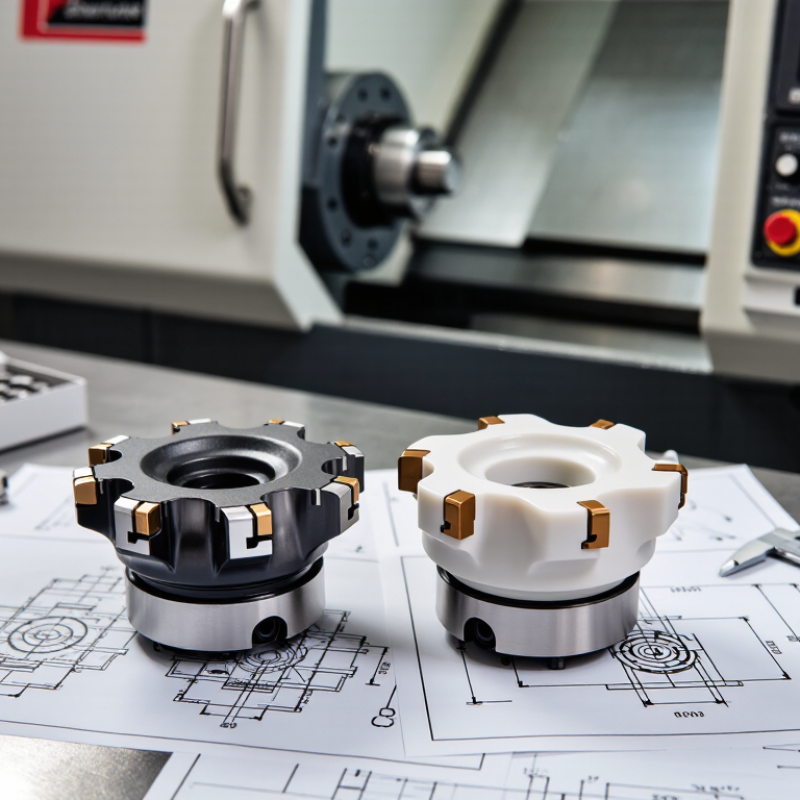
Carbide cutting tools are made from hard carbide particles held together by a metallic binder, often cobalt. The result is a dense material that keeps a sharp edge under substantial heat and pressure. In a machine shop, carbide inserts commonly cut steel while coolant runs over a bright, curling chip. They tolerate interrupted cuts better than many ceramics, though a sudden impact can still chip an edge.
Ceramic tools use hard, heat-resistant compounds such as alumina or silicon nitride. Unlike carbide, many ceramic grades can cut at very high speeds with little or no coolant. They are often used on stable machines for hard or heat-resistant materials. The trade-off is brittleness: vibration, a rough surface, or an uneven cut may crack the cutting edge. Small details matter.
These materials are not simply “tough” and “fast.” Carbide usually suits varied jobs, lower speeds, and cuts with occasional interruption. Ceramic can excel in steady, high-speed turning, where heat softens the workpiece near the cutting zone. A tool’s grade and geometry also change its behavior, so material alone cannot predict performance. Not always. Check the workpiece, machine rigidity, cut depth, and chip shape before choosing; a neat-looking setup can still hide vibration.
Tool material changes the heat, speed, and stability a cutting edge can tolerate. In suitable cast-iron and hardened-steel operations, machining data summarized in ASM Handbook, Volume 16, show ceramic tools can run several times faster than carbide. That advantage comes with a trade-off: ceramics resist heat and wear, but are more brittle. A small interruption in the cut can chip an edge.
Carbide is tougher and handles interrupted cuts, vibration, and varied shop conditions better. ISO 513:2012 classifies cutting-tool materials by application, rather than naming one material as universally faster. That matters on the shop floor. A carbide insert may last longer when a casting has a hard skin or the setup lacks rigidity. Ceramics can excel in continuous, high-speed cuts where heat stays concentrated near the edge.
The numbers need context. Speeds in tool-material guides are starting points, not promises; workpiece hardness, insert geometry, coolant, and machine stiffness all affect results. A practical test is to compare edge wear and cycle time on the same part. Watch the chips, too. I would not choose ceramic from a speed chart alone; a brief vibration can undo its productivity gain.
Carbide and ceramic tools make different trade-offs in speed, toughness, and cost. Carbide is often the more forgiving choice for interrupted cuts, variable setups, and smaller machines. It tolerates moderate vibration better, which can help prevent chipped edges. In many common machining jobs, it also offers predictable performance across a useful range of cutting speeds. A good starting point, not a guarantee.
Ceramic inserts can run at much higher cutting speeds when turning suitable heat-resistant alloys or hardened materials. They work best with a rigid machine, steady engagement, and carefully controlled heat. A brief interruption or a workpiece with a hard surface can chip the edge. That matters. Faster cutting may shorten cycle time, but it does not automatically lower the cost per part.
Compare the full job, not just the insert price. Carbide may cost less per edge and survive rough handling, while ceramic can pay off on long, continuous cuts with stable conditions. Check the material, machine rigidity, cut interruptions, and required finish before choosing. Even a solid setup can chatter once a part is clamped differently. That detail is easy to miss, and tool-life estimates should be tested on a small run before production.
Ceramic tools generally support higher cutting speeds and retain hardness at high temperatures, while carbide tools are typically tougher and more resistant to chipping. Carbide inserts often have a lower initial purchase cost. Ratings are generalized 1–5 comparisons, not standardized test results; actual performance and cost depend on the workpiece, operation, grade, and tooling setup.
Choosing carbide or ceramic starts with the workpiece and the cut, not a tool’s advertised speed. For tough steel, stainless alloys, or interrupted cuts, carbide usually tolerates impact and changing loads better. A ceramic insert suits hard cast iron or heat-resistant alloys in a rigid setup with a steady cut. It can run fast, but edge chipping is costly. Small detail: rigidity matters.
Match the tool to the operation. A milling pass with entry and exit impacts favors carbide; continuous turning can let ceramic exploit heat-resistant hardness. Check the workpiece hardness, scale, and coolant plan, then consider machine power and fixture stiffness. ISO 3685:1993, a tool-life testing standard, uses 0.3 mm average flank wear as a common criterion in turning tests. Treat that as a comparison point, not a universal production limit.
Run a short trial on the actual machine. Record tool life, surface finish, and cycle time under the same conditions. If ceramic chips at the corners, reduce interruptions or reassess setup rigidity before rejecting the material. Carbide may still win on total cost, even with a slower cut. The first test can mislead. Chips, vibration, or a weak fixture may be the real problem, and that distinction is easy to overlook.
| Decision Factor | Carbide Tools | Ceramic Tools | Practical Selection Guidance |
|---|---|---|---|
| Typical composition | Tungsten-carbide particles bonded with a metallic binder, commonly cobalt; grades vary in grain size, binder content, and coating. | Usually alumina-based, silicon-nitride-based, or mixed ceramic; some grades use whisker reinforcement or other additives to improve toughness. | Choose by grade as well as tool family. Coatings, substrate composition, edge preparation, and insert geometry can significantly change performance. |
| Toughness and edge strength | Generally higher toughness and better resistance to chipping, vibration, and interrupted cuts. | Generally harder but more brittle; sensitive to impact, unstable setups, and sudden temperature changes. | Favor carbide for interrupted cuts, thin sections, weak workholding, variable stock, or operations with vibration. Use ceramic when the cut is stable and continuous. |
| Hot-hardness and high-speed cutting | Suitable for a broad range of cutting speeds, but its useful cutting speed can be limited by heat-related wear for some workpiece materials. | Retains hardness at high cutting temperatures and can support substantially higher speeds in suitable, stable operations. | Ceramic can reduce cycle time in high-speed applications, but only when the machine, workholding, and toolpath can maintain a consistent cut. |
| Steel and stainless steel | A versatile first choice for turning, milling, drilling, and interrupted operations across many steel and stainless grades. | Can be effective in selected high-speed turning applications, particularly with suitable ceramic grades and a stable, continuous cut; not a universal replacement for carbide. | Start with carbide for general-purpose work, interrupted cuts, and variable conditions. Trial ceramic for stable, production-scale turning where speed gains justify testing. |
| Cast iron | Works across many cast-iron operations, especially where toughness, interrupted cuts, or lower speeds are important. | Often well suited to high-speed machining of cast iron in stable turning or milling conditions; suitable grades can offer strong wear resistance. | Consider ceramic for consistent, high-volume cast-iron machining. Use carbide when cuts are interrupted, the casting surface is irregular, or the setup is less rigid. |
| Hardened steels | Can machine hardened materials with suitable grades, though speed and tool life depend strongly on hardness, geometry, and setup. | Can be used for high-speed finishing of some hardened steels, especially in stable turning with limited interruption. | Compare the workpiece hardness and operation type with the insert supplier’s grade guidance. Avoid assuming ceramic is suitable for interrupted or unstable cuts. |
| Nickel-based heat-resistant alloys | Commonly used for these alloys, with tougher grades and appropriate geometry helping manage work-hardening and cutting forces. | Some silicon-nitride-based ceramics are used for high-speed machining of selected heat-resistant alloys, particularly in stable rough-turning applications. | Use a grade specifically designed for the alloy and operation. Test carefully because heat, work-hardening, and notch wear can limit tool life. |
| Interrupted cuts and milling | Usually the safer starting point because of its greater resistance to impact and edge chipping. | Generally requires a rigid machine, secure workholding, smooth entry and exit, and carefully controlled engagement; performance is highly application-dependent. | Choose carbide for variable engagement, keyways, cross-holes, scale, or frequent entry and exit. Consider ceramic only after a controlled production trial. |
| Coolant and thermal shock | Coolant use depends on the grade and operation; follow the toolmaker’s recommendations and maintain consistent delivery. | Many ceramic applications are run dry or with a consistent coolant strategy because sudden temperature changes can cause thermal cracking. | Avoid alternating between dry cutting and intermittent coolant unless the selected grade and process are approved for that condition. |
| Best general fit | Flexible choice for job shops, changing workpieces, lower-to-moderate production volumes, and operations where toughness matters. | Specialized choice for stable, high-speed production where the workpiece material and operation allow the ceramic grade to perform. | Prioritize total cost per part, tool life, cycle time, and process reliability—not cutting speed alone. |
Important: Cutting conditions depend on the exact tool grade, workpiece hardness and condition, machine rigidity, tool geometry, and operation. Confirm recommended speeds, feeds, depth of cut, and coolant strategy with the tool supplier, then validate them through a controlled trial.
Before mounting a tool, confirm the workpiece alloy, hardness, cut continuity, and machine rigidity. Carbide generally handles interrupted cuts and setup variation more forgivingly. Ceramic grades can support higher cutting speeds in suitable applications, but impact and vibration may cause chipping. Check spindle runout, holder condition, insert seating, and workholding; even a small looseness can spoil a finish.
Small detail. Big consequence.
Match the edge geometry and chipbreaker to the cut, not just the material label. ISO 513:2012 provides classifications for cutting-tool materials and applications, useful as a reference alongside grade-specific technical data.
Plan coolant deliberately. Some ceramic operations run dry, while others require specific coolant practice; follow the tool maker’s technical guidance for the grade and cut. Carbide often suits interrupted or variable cuts, but it still needs stable clamping and sensible feed.
The U.S. Geological Survey’s Mineral Commodity Summaries 2025 estimates 2024 global tungsten mine production at about 81,000 metric tons. Tungsten is a key carbide raw material, but that supply figure cannot determine which tool will cut best.
Run a short test cut, inspect the edge under good light, and record wear, sound, and chip shape.
I still check it twice. A neat-looking setup can hide runout.
Carbide combines hard particles with a metallic binder and handles changing loads relatively well. Ceramic resists heat and can cut at high speeds, but it is more brittle.
Carbide often suits tough steel, stainless alloys, milling, and interrupted cuts. It tolerates entry and exit impacts better, though its edge can still chip.
Ceramic can suit continuous turning of hard cast iron or heat-resistant alloys. A rigid machine and steady cut help prevent edge damage.
Vibration, runout, or a loose holder can damage ceramic edges and spoil the finish. Check the insert seating and workholding. Small detail. Big consequence.
No. Some ceramic operations run dry, while others need specific coolant practices. Follow the grade’s technical guidance rather than assuming.
Check the workpiece alloy and hardness, cut continuity, machine power, fixture stiffness, and coolant plan. Match the edge geometry and chipbreaker to the operation.
Run a short test on the actual machine. Record tool life, surface finish, cycle time, chip shape, and wear under consistent conditions.
Look for interrupted cutting, vibration, or weak clamping before rejecting ceramic. Reassess the setup and try a controlled test. The first result can mislead.
No. Tungsten is an important carbide raw material, but supply figures cannot predict cutting performance. The workpiece and setup matter more. I would check twice.
Choosing between carbide and ceramic cutting tools starts with understanding how their material properties shape performance. Carbide tools are generally tough and versatile, making them suitable for a wide range of workpieces and operations, especially when resistance to impact and interrupted cuts matters. Ceramic tools can support higher cutting speeds and heat resistance in appropriate applications, but they are typically less tolerant of sudden shocks or unstable conditions. These differences affect achievable speed, tool life, finish, and overall cost.
To decide how to choose between carbide and ceramic cutting tools, consider the workpiece material, the type of cut, machine rigidity, operating conditions, and production goals. Compare the expected productivity gains with tool cost and replacement frequency rather than judging by speed alone. Before setup, check that the tool is compatible with the operation, securely mounted, and used with suitable cutting parameters. Stable machining conditions and careful preparation help improve performance and reduce premature tool failure.

DentFix Tool