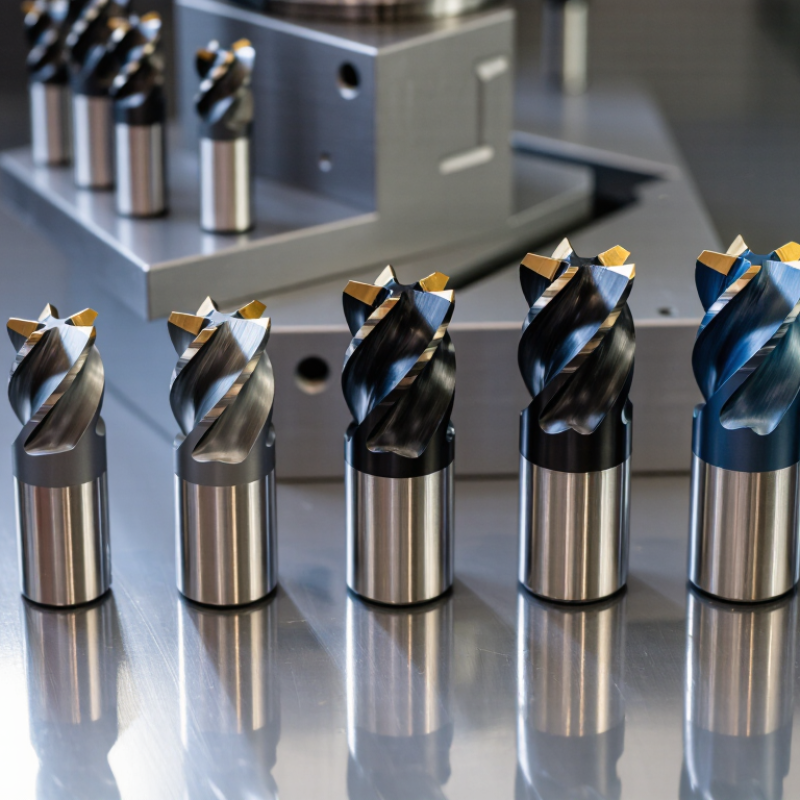
2026 How to Choose the Right Number of End Mill Flutes?

Time:2026-10-11 Author:Ethan
0%

Choosing the right number of end mill flutes can determine whether a machining job produces clean walls or expensive scrap. In production, flute count affects chip evacuation, feed rate, tool strength, heat control, and surface finish. The choice is rarely universal.

Industry data supports this practical concern. The U.S. Department of Energy’s Industrial Assessment Center reports identify compressed air, cutting energy, and production efficiency as recurring manufacturing cost factors. Cutting-tool market analyses from Grand View Research and Allied Market Research also describe growing demand for high-speed machining, difficult materials, and longer tool life. These trends make flute selection more important, especially when shops pursue higher material-removal rates.

So, how to determine the correct number of flutes for an end mill? Start with the workpiece, machine rigidity, cutter diameter, and available coolant. Two-flute tools usually leave larger chip spaces for aluminum and other gummy materials. Three-flute designs can balance chip clearance with higher feed potential. Four or more flutes often improve rigidity and finish in steel, stainless steel, and hardened alloys. Yet this rule has exceptions.

A rigid machine may tolerate a higher flute count. A weak spindle may not.

Technical guidance from Sandvik Coromant, Kennametal, and Seco Tools consistently links flute selection with chip load, radial engagement, and cutting speed. Their calculators provide useful starting points, not guaranteed answers. Real cutting tests still matter. A bright edge, packed chips, or a hot blue tool can expose a poor choice faster than any catalog.

This guide examines the variables behind flute selection and the compromises experienced machinists still revisit.

2026 How to Choose the Right Number of End Mill Flutes?

What End Mill Flutes Are and Why Their Number Matters

What End Mill Flutes Are and Why Their Number Matters

An end mill flute is a cutting edge that removes material during rotation. The spaces between flutes carry chips away from the cutting zone. More flutes create more cutting edges and often produce a smoother finish. Fewer flutes leave larger channels for chip evacuation. This difference becomes obvious when machining a narrow slot in aluminum. Packed chips can quickly damage the tool and workpiece.

Flute count also changes feed rate, heat, and tool stiffness. A two-flute cutter usually gives chips more room to escape. It suits softer materials and open slotting operations. Three or four flutes can support higher feed rates and improve surface quality. More cutting edges may work well in steel, especially during side milling. However, extra flutes can trap chips when the cut is deep or poorly cooled.

The correct choice depends on material, radial engagement, axial depth, and machine power. Check the manufacturer’s cutting data, then reduce the feed slightly during the first trial. Watch the chip shape, sound, and edge color. Shiny chips may indicate excessive heat. A rough finish can reveal deflection or unstable holding. My initial choice is not always right. Real cutting conditions often disagree with a simple chart. Measure the result and adjust one factor at a time.

How Material Properties Influence Flute Selection

2026 How to Choose the Right Number of End Mill Flutes?

Material properties should guide flute selection more than habit. Aluminum 6061-T6 conducts heat at approximately 167 W/m·K, according to ASM Handbook data. Its soft, gummy chips need larger spaces for evacuation. A two- or three-flute end mill usually provides that clearance. More flutes can increase feed potential, but packed chips may weld inside the tool.

Steel behaves differently. AISI 4140 transfers heat at roughly 42 W/m·K, while Ti-6Al-4V is near 7 W/m·K, based on ASM Handbook and NIST material-property data. Lower conductivity leaves more heat near the cutting edge. Four or five flutes can support rigidity in steel, provided chip load and coolant remain suitable. Titanium often needs three or four flutes, generous chip clearance, and conservative engagement.

Hard materials punish assumptions. Very low radial engagement may favor extra flutes, but deep slots need breathing room. Watch the chips. Powdery chips can indicate rubbing, while blue chips may signal excessive heat. In practice, I would begin with the manufacturer’s recommended chip load, then adjust after measuring sound, finish, and tool wear. That method is not perfect. Machine rigidity, coating condition, and workholding can overturn the textbook choice. A flute count is only a starting point.

How Cutting Conditions Determine the Best Flute Count

How Cutting Conditions Determine the Best Flute Count

Choosing an end mill by flute count alone often creates avoidable problems. Cutting conditions should guide the decision. In practical milling trials, chip space, feed rate, material, and tool engagement matter more than a fixed rule. Aluminum usually needs larger chip channels for fast evacuation. Fewer flutes often provide that space. Steel may accept more flutes because its chips are smaller and cutting forces are higher.

Radial engagement changes the answer. A light side cut can use more flutes because each tooth removes a smaller chip. This can improve productivity when the machine holds its speed well. Heavy slotting is different. It demands open chip passages, stable coolant flow, and enough room to prevent recutting. Chips tell the story. If they weld to the tool, the flute count may be too high, or the feed may be too low.

Axial depth and machine rigidity also deserve attention. A rigid setup can support more cutting edges and higher feed rates. A weak holder may chatter, even with a suitable cutter. I have seen operators reduce flute count to solve vibration, only to discover poor workholding later. That choice can fail. Test one variable at a time, then inspect chip shape, edge wear, sound, and surface finish. Toolpath direction matters too. A high flute count is not automatically better; it must match the programmed feed per tooth and available spindle power.

How to Match Flutes with Different Milling Operations

Choosing end mill flutes starts with the milling operation, not the tool catalog. A two-flute cutter leaves a wide chip space, making it suitable for slotting aluminum and soft materials. A three-flute design balances chip evacuation and feed rate during profiling. For steel, stainless steel, and general side milling, four flutes often provide better rigidity and surface control. Five or more flutes support high-speed finishing, especially when radial engagement is light.

The equation is simple: feed rate equals flute count multiplied by chip load and spindle speed. More flutes can raise productivity, but only when the machine maintains the required feed. Otherwise, each tooth removes too little material and may rub. A 2024 global cutting-tools market report estimated the market at more than 20 billion dollars, showing how widely these decisions affect production. However, market growth does not prove that more flutes are always better.

Watch the chips at the machine. Powder-like chips suggest rubbing, while long, hot chips suggest poor evacuation. A technical review from the U.S. Cutting Tool Institute and manufacturing-industry associations also links tool consumption with ongoing demand for efficient machining, but shop conditions still decide the result. I would begin with four flutes for steel, then test three or five when heat, chatter, or chip packing appears. That choice may not be perfect. Record spindle load, finish, and tool wear after every trial.

2026 How to Choose the Right Number of End Mill Flutes?

How to Match Flutes with Different Milling Operations

How to read the chart: These are practical starting ranges commonly used for solid-carbide end mills. Fewer flutes provide larger chip gullets for chip evacuation, especially in aluminum and slotting. More flutes increase core strength and allow higher feed rates in steel, stainless steel, titanium, and finishing operations. Final selection should also consider tool diameter, axial and radial depth of cut, machine power, coolant, workholding, and the tool manufacturer’s cutting data.

How to Verify and Optimize Your End Mill Choice

How to Choose the Right Number of End Mill Flutes in 2026

Choosing flute count is only the starting point. The real decision comes from verifying performance during cutting. Fewer flutes usually provide more space for chip evacuation, especially in aluminum or deep slots. More flutes can increase rigidity and feed potential when machining steel or other harder materials. However, the best choice depends on tool diameter, workpiece hardness, machine power, and cutting depth.

In a real machining trial, check the chips before trusting the finish. Long, hot chips may indicate poor evacuation or excessive heat. Compare spindle load, cutting sound, burr formation, and surface texture. Measure tool runout with a suitable gauge, because even a small error can reduce tool life. Then adjust feed per tooth, radial engagement, axial depth, and coolant flow one variable at a time. My first choice is not always correct. A smooth surface can still hide unstable cutting.

Tips: Record the tool, material, flute count, cutting parameters, and observed results. Test two suitable flute options on the same workpiece. Watch for rubbing at low feed rates and chatter at high engagement. If chips weld to the cutting edges, reduce heat and improve evacuation. Do not optimize only for speed. A slightly slower cut may deliver better accuracy, longer tool life, and more predictable production. Review the results after several parts, not just one test piece.

2026 How to Choose the Right Number of End Mill Flutes? - How to Verify and Optimize Your End Mill Choice

Workpiece Material Typical Flute Count Recommended Use Why This Choice Works Main Risk Verification Indicator
Aluminum and other soft, gummy nonferrous metals 1–3 Slotting, pocketing, profiling, and high-speed roughing Fewer flutes provide larger chip spaces and improve chip evacuation, especially in deep pockets and full-width slots. Built-up edge, chip recutting, and welding caused by insufficient evacuation or poor lubrication. Chips leave the cut freely; the flute remains clean and the workpiece shows no smeared aluminum.
Brass, bronze, and free-machining copper alloys 2–4 General profiling, shallow pockets, and finishing The material generally produces manageable chips, allowing a moderate flute count while maintaining cutting-edge strength. A very high flute count can restrict chip space during slotting. Stable cutting sound, consistent chip size, and no visible edge chipping.
Mild steel and low-carbon steel 3–4 General roughing, profiling, and shoulder milling A medium flute count balances chip space, tool strength, and productive feed rates. Excessive heat from low chip load, excessive radial engagement, or inadequate coolant. Cutting edges remain sharp, chips are warm rather than blue, and the tool does not rub during passes.
Stainless steel 4–5 Rigid-machine roughing, adaptive milling, and finishing Additional flutes can improve productivity and edge support, while chip evacuation must still be adequate for the selected radial and axial engagement. Work hardening caused by rubbing, dwelling, or an excessively low feed per tooth. No hardened surface band develops; the tool produces consistent chips without squealing or discoloration.
Tool steel and alloy steel 4–6 Roughing and finishing on rigid setups More flutes increase tooth engagement opportunities and core strength, which can support higher metal-removal rates when the machine is rigid. Overloading the tool because chip space, workholding, or machine power is inadequate. Spindle load remains stable, tool deflection is controlled, and the finish does not deteriorate as feed increases.
Hardened steel 5–7 Light radial engagement, finishing, and hard milling A higher flute count can provide stronger teeth and smoother cutting at low radial engagement, subject to tool geometry and coating suitability. Thermal damage, edge chipping, and vibration from excessive engagement or interrupted cuts. Cutting edge wear is uniform, the workpiece remains dimensionally stable, and no heat checking appears.
Cast iron 3–5 Face milling, profiling, and dry or air-blast machining A moderate flute count offers adequate tooth strength while allowing abrasive chips and dust to exit the cut. Abrasive flank wear and contamination of machine components by cast-iron dust. Flank wear progresses evenly and chip evacuation does not cause recutting or surface scoring.
Titanium and heat-resistant alloys 4–6 Rigid adaptive milling, shallow radial engagement, and controlled finishing A moderate-to-high flute count can maintain feed productivity, but flute spacing and coolant delivery must prevent heat concentration. Heat buildup, notch wear, and work hardening caused by rubbing or inadequate coolant flow. Tool temperature is controlled, chips do not weld to the edge, and cutting forces remain predictable.
Plastics and composites 1–3 Routing, pocketing, trimming, and chip-sensitive operations Fewer flutes create larger chip spaces and can reduce heat when combined with sharp geometry and suitable dust extraction. Melting, delamination, fiber pull-out, and chip packing. The cut edge remains cool and clean, with minimal melting, fuzzing, or delamination.

End Mill Flute Selection and Verification Checklist

Decision Dimension Selection Rule What to Measure or Observe Optimization Action
Chip evacuation Choose fewer flutes when the cut is a deep pocket, full slot, or difficult-to-clear cavity. Packed flutes, recut chips, rising spindle load, and poor surface finish. Reduce flute count, shorten axial depth, improve air or coolant delivery, or reduce radial engagement.
Machine rigidity Use a moderate or higher flute count only when the machine, holder, workholding, and tool projection are sufficiently rigid. Vibration, tool deflection, spindle-load variation, and dimensional error. Shorten tool overhang, improve workholding, reduce engagement, or select a stronger tool core.
Feed per tooth Calculate feed using the actual flute count: Feed = RPM × Number of Flutes × Chip Load. Chip thickness, cutting sound, edge wear, and spindle load. Do not keep the same programmed feed when changing flute count; recalculate the feed rate.
Radial engagement High flute counts are more practical at light radial engagement than in full-width slotting. Percentage of tool diameter engaged and the amount of chip recutting. Use adaptive or trochoidal paths for difficult materials and maintain consistent engagement.
Axial depth of cut Deep axial cuts require sufficient chip space and effective coolant or air access. Chip packing near the shoulder, temperature rise, and cutting-edge wear location. Use fewer flutes, reduce axial depth, or divide the operation into multiple passes.
Tool life and finish Select the flute count that produces stable cutting forces and acceptable wear at the target productivity. Flank wear, chipping, burr formation, roughness, and dimensional drift. Run a controlled test, change one variable at a time, and record tool life, load, finish, and cycle time.
Important: The flute-count ranges are practical starting points, not fixed specifications. Final selection must be verified against the end mill geometry, diameter, helix angle, workpiece condition, machine capability, tool-holder quality, cutting parameters, and the tooling supplier's recommended data.

FAQS

What does an end mill flute do?

A flute forms a cutting edge during rotation. The spaces between flutes carry chips away from the cutting zone. Chips tell the story.

How does flute count affect aluminum slotting?

Two flutes usually leave larger channels for chip evacuation. This helps during open slots and softer materials. In a narrow aluminum slot, packed chips can damage both tool and workpiece.

Why might a cutter need more flutes?

Three or four flutes can support higher feed rates. They may also produce a smoother surface. More edges can improve rigidity during side milling in steel.

Can more flutes create problems?

Yes, especially during deep cuts or weak cooling. Extra flutes may trap chips near the cutting zone. Heat can rise quickly. That choice can be wrong.

What factors should guide flute selection?

Consider workpiece material, tool diameter, machine power, and cutting depth. Radial engagement and axial depth also matter. A powerful machine may handle more cutting edges comfortably.

How can I verify the correct end mill choice?

Start with published cutting data and reduce feed slightly for the first trial. Watch chip shape, cutting sound, edge color, and surface texture. Shiny chips may show excessive heat. Do not trust appearance alone.

What cutting signs suggest adjustment?

Long, hot chips can indicate poor evacuation or excess heat. Chatter may appear with high engagement. Rubbing can occur when feed rates are too low. Welded chips require better cooling or evacuation.

Which settings should I change during optimization?

Adjust feed per tooth, radial engagement, axial depth, or coolant flow. Change one variable at a time. Measure tool runout with a suitable gauge. Even small runout can shorten tool life.

How should machining trials be recorded?

Record the tool diameter, material, flute count, and cutting parameters. Note spindle load, burrs, sound, chips, and surface texture. Compare two suitable flute options on the same workpiece. One test piece may mislead you.

Conclusion

Choosing the right number of end mill flutes is essential for balancing cutting efficiency, chip evacuation, tool strength, and surface finish. Flutes are the cutting edges that remove material, and their number directly affects chip space, feed rate, rigidity, and heat control. The best choice depends first on the workpiece: soft, gummy materials often require fewer flutes and larger chip gullets, while harder materials may benefit from more flutes for improved strength and smoother cutting.

Cutting conditions also play a major role. Spindle speed, feed rate, depth of cut, machine power, coolant, and tool engagement should all be considered when deciding how to determine the correct number of flutes for an end mill. Fewer flutes are commonly suitable for slotting and deep-pocket work where chip evacuation is difficult, while more flutes can support high-feed finishing and shallow side milling. After selecting a tool, verify chip formation, cutting temperature, vibration, tool wear, and surface quality, then adjust the flute count or machining parameters to achieve stable, efficient results.

Ethan

Ethan

Ethan is a seasoned marketing professional with a deep expertise in our company's innovative product line. With a passion for sharing knowledge and insights, he takes the lead in regularly updating our corporate blog, where he explores industry trends, product features, and effective marketing......