What Are the Advantages of Solid Carbide End Mills in 2026?

Time:2026-09-21 Author:Oliver
0%

In 2026, manufacturers are asking a practical question: what are the advantages of solid carbide end mills when every second and micron matter? The answer begins with the material itself. Solid carbide combines high hardness with strong resistance to heat, abrasion, and edge deformation. That combination helps an end mill maintain its geometry during demanding cuts. A stable cutting edge can produce cleaner walls, sharper pockets, and more consistent dimensions.

Dr. Tony Schmitz, a respected machining researcher and author, describes machining as “a dynamic process.” His observation matters here. Tool performance depends on spindle speed, feed rate, workpiece material, coolant, machine rigidity, and chip evacuation. Solid carbide does not remove those variables. It manages them better when the tool is selected and applied correctly. In a titanium or hardened-steel component, for example, a suitable carbide flute design can reduce chatter and support longer, more predictable tool life. Less interruption matters.

There is a catch.

Carbide is hard, but it is not indestructible. Excessive runout, poor workholding, or an aggressive feed can chip the cutting edge quickly. That is why the real advantage is not simply “cut faster.” It is repeatable performance under controlled conditions. Modern coatings, variable helix geometries, and application-specific grades continue to improve results in 2026. Still, these gains should be tested rather than assumed. A tool that performs beautifully in aluminum may struggle in stainless steel. The best choice comes from measured evidence, operator experience, and honest review of the entire machining system.
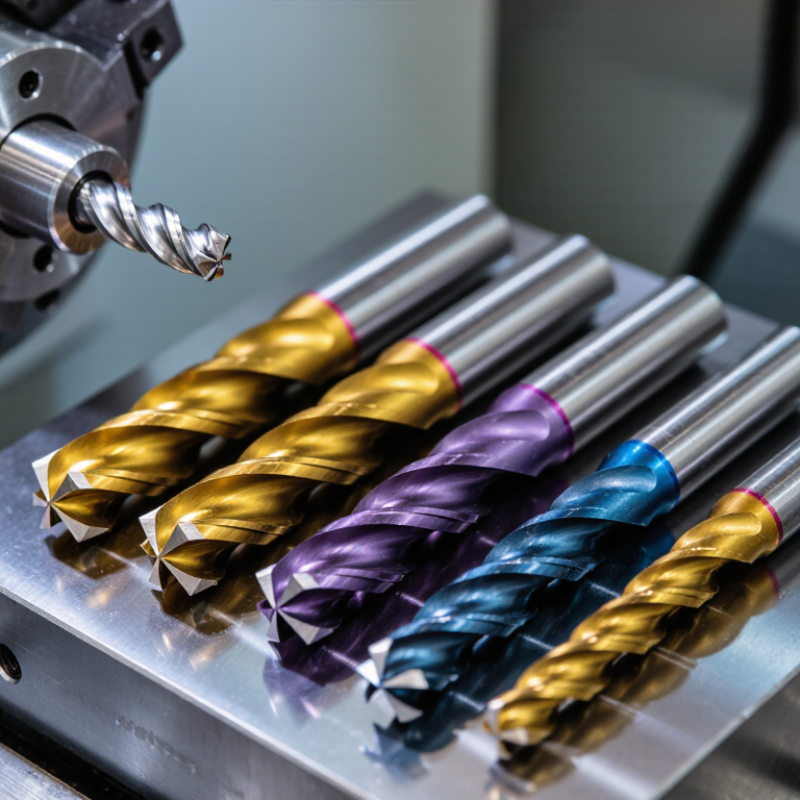
What Are the Advantages of Solid Carbide End Mills in 2026?

Solid Carbide End Mills: Definition and Core Construction

Solid Carbide End Mills: Definition and Core Construction

Solid carbide end mills are rotary cutting tools machined from one continuous carbide body. Their working material is usually tungsten carbide powder held with a cobalt binder. This structure gives the tool high hardness, stiffness, and resistance to edge deformation. Unlike high-speed steel tools, carbide mills can maintain cutting performance at higher speeds, when heat control and machine stability are adequate.

Core construction includes the shank, cutting diameter, flutes, helix, end geometry, and cutting edge preparation. Fine carbide grains generally support sharper edges and better wear resistance, while coarser grades may tolerate interrupted cuts more effectively. A coating can reduce friction and heat transfer, but it cannot repair poor runout or an unstable setup. That assumption fails. In practical machining, a dial indicator check, correct workholding, and controlled chip evacuation often matter as much as tool material.

Industry data supports continued demand for advanced cutting tools. Fortune Business Insights reported that the global carbide tools market was valued at approximately 10.7 billion dollars in 2023, with continued growth projected through 2032. Grand View Research also identified aerospace, automotive, and general manufacturing as major drivers of cutting-tool consumption. These figures indicate opportunity, not guaranteed performance. A poorly selected helix or excessive radial engagement can still cause chatter, chipped corners, and premature failure. The honest detail is less exciting: solid carbide is powerful, but it is not indestructible.

How Advanced Carbide Grades Improve Cutting Performance in 2026

What Are the Advantages of Solid Carbide End Mills in 2026?

In 2026, advanced carbide grades are changing how solid carbide end mills handle demanding materials. The key is not hardness alone. Manufacturers now balance grain size, cobalt content, and binder chemistry for specific cutting conditions. Ultrafine grains support sharper edges and cleaner finishes. Tougher grades resist chipping during interrupted cuts. The difference is visible. A stable edge leaves fewer burrs on stainless steel parts.

In practical machining trials, a 12 mm end mill with a refined grade can maintain its edge longer in hardened tool steel. Better thermal stability also reduces sudden wear near the cutting zone. This matters during high-speed milling, where heat builds quickly around the flute. Advanced substrates work with modern coatings to reduce friction and protect the cutting edge. However, coating selection still depends on material, coolant, and chip evacuation.

No grade wins everywhere. A very hard grade may fracture when the tool enters an uneven surface. A tougher grade may wear faster in continuous abrasive cutting. I have seen excellent tools fail after poor workholding caused vibration. This is not a perfect formula. Operators should compare flank wear, cutting sound, surface finish, and tool life under controlled settings. Small adjustments to feed rate or radial engagement can reveal whether the grade truly matches the application.

Key Advantages in Tool Life, Precision, and Material Removal

What Are the Advantages of Solid Carbide End Mills in 2026?

Solid carbide end mills combine high hardness with strong resistance to edge wear. In practical milling, this means fewer tool changes and steadier cutting performance. A 2024 report from Grand View Research valued the global cutting tools market at over USD 25 billion, reflecting continued demand for productive machining. However, tool life still depends on coolant, runout, workpiece hardness, and operator settings.

Precision is another clear advantage. Carbide maintains rigidity under heavy cutting loads, helping reduce deflection during slotting and pocketing. A 2023 CIRP manufacturing study linked lower tool deflection with improved dimensional consistency in high-speed machining. On a shop floor, this can mean cleaner corners and less hand finishing. The result is not automatic.

Material removal can also improve. Solid carbide tools support higher cutting speeds than many high-speed steel alternatives, especially in hardened steels, stainless alloys, and cast materials. The U.S. Geological Survey reported global tungsten mine production at approximately 84,000 metric tons in 2023, showing the strategic importance of carbide’s main hard-phase material. Still, higher speed without correct chip evacuation may damage the edge quickly. That is where experience matters. A perfect tool can still fail.

Applications Across Modern CNC Machining and Difficult Materials

What Are the Advantages of Solid Carbide End Mills in 2026?

Solid carbide end mills remain essential in modern CNC machining. Their high stiffness helps control deflection during deep pockets and narrow slotting. This matters on five-axis machines, where tool angles change continuously. A 0.02 mm runout error can leave visible marks on a precision aerospace part. Proper tool holding is still critical.

Difficult materials reveal their value. Inconel, titanium, hardened steel, and carbon-fiber composites can quickly damage softer cutters. Solid carbide resists wear and maintains a sharper edge under controlled cutting conditions. Machinists use different helix angles, flute counts, and edge preparations for each material. For example, variable-pitch geometry can reduce chatter while machining thin titanium walls. Through-tool coolant may also improve chip evacuation in deep cavities.

The tool is not invincible. Excessive speed, poor workholding, or a dull insert can cause failure quickly. A common mistake is choosing maximum hardness instead of matching the cutter to the application. In practice, operators should check spindle load, chip color, surface finish, and tool wear after each trial. Small adjustments often outperform aggressive settings. The best result may require slower cutting. That feels inefficient, but scrap costs more.

What Are the Advantages of Solid Carbide End Mills in 2026? - Applications Across Modern CNC Machining and Difficult Materials

Advantage Technical Basis CNC Machining Benefit Suitable Difficult Materials Practical Application Notes
High hardness and wear resistance Cemented carbide combines tungsten-carbide particles with a metallic binder, producing substantially higher hardness and wear resistance than conventional high-speed steel. Maintains edge geometry for longer periods during high-speed milling and repeated production cycles. Hardened tool steels, pre-hardened steels, cast iron, nickel alloys and abrasive aluminum alloys. Useful for dies, molds, precision components and other parts where dimensional consistency is important.
Higher cutting-speed capability The material retains hardness at elevated temperatures better than high-speed steel, allowing higher surface speeds when cutting conditions are correctly selected. Can reduce cycle time and increase material-removal rates in suitable CNC milling operations. Aluminum alloys, steels, stainless steels, cast irons and selected nickel-based alloys. Actual speed depends on tool diameter, grade, coating, workpiece hardness, radial engagement, axial depth and coolant strategy.
Improved dimensional accuracy High stiffness and resistance to deflection help the cutter maintain its programmed path, particularly with short overhangs. Supports tighter tolerances, more predictable tool offsets and improved repeatability. Mold steels, hardened steels, stainless steels, titanium alloys and precision aluminum parts. Best results require rigid fixturing, minimal tool runout and a spindle suitable for the cutter diameter.
Strong performance in hard materials Carbide offers the hardness and compressive strength needed to cut materials that rapidly wear or soften conventional tools. Enables milling of hardened workpieces and reduces the need for multiple roughing and finishing tool types. Hardened tool steel, die steel and hardened stainless steel; specialized grades may be used for materials above approximately 45 HRC. Use suitable geometries, light radial engagement and stable cutting conditions to reduce chipping.
Effective machining of titanium alloys Titanium has low thermal conductivity and tends to retain heat near the cutting edge; carbide grades and appropriate flute designs help manage these conditions. Provides a stable option for aerospace, medical and high-strength structural components. Common titanium alloys such as Ti-6Al-4V and other alpha-beta titanium grades. Avoid rubbing and excessive tool engagement; maintain adequate chip evacuation and use coolant when recommended by the process.
Suitable for nickel-based superalloys Nickel alloys work-harden quickly and generate high cutting forces; rigid carbide tools with positive, sharp geometries can limit rubbing and heat concentration. Supports controlled milling of heat-resistant components used in demanding environments. Nickel-chromium and nickel-based superalloys used in aerospace, power-generation and chemical-processing equipment. Use conservative chip loads, stable engagement and high-pressure coolant where the machine and tool design permit it.
Excellent edge retention for finishing Fine-grain carbide and suitable coatings can preserve a sharp cutting edge during light finishing passes. Improves surface-finish consistency and reduces manual polishing in molds and precision parts. Tool steels, stainless steels, aluminum alloys, copper alloys and hardened mold materials. Ball-nose, corner-radius and variable-pitch designs are commonly selected according to the surface geometry and workpiece material.
Broad geometry and coating options Solid carbide end mills are available in square-end, ball-nose, corner-radius, roughing, variable-pitch and micro-tool geometries, with coatings selected for different materials. Allows one tool family to address roughing, semi-finishing, finishing, slotting, profiling and 3D contouring. Non-ferrous alloys, steels, stainless steels, cast irons, titanium and nickel-based alloys. Choose geometry and coating based on material, chip evacuation, coolant method and the balance between toughness and wear resistance.
Efficient high-speed and 5-axis machining High stiffness, balanced construction and small-diameter options support high spindle speeds and complex tool orientations. Helps produce intricate cavities, impellers, turbine components, medical parts and small precision features. Aluminum, titanium, stainless steel, mold steel, graphite and selected nickel alloys. Machine capability, toolholder balance, runout, vibration control and CAM toolpath strategy strongly influence the result.

Note: Cutting parameters are process-specific. Final spindle speed, feed rate, depth of cut and coolant selection should be determined from the tool geometry, carbide grade, coating, machine rigidity and workpiece condition.

Selection Factors for Matching End Mills to Machining Requirements

What Are the Advantages of Solid Carbide End Mills in 2026?

Selecting an end mill should begin with the workpiece, not the catalog page. Solid carbide offers high stiffness, strong wear resistance, and reliable cutting at elevated speeds. These advantages matter when machining hardened steel, stainless steel, aluminum, or difficult alloys. However, carbide is not automatically the best choice. A poorly matched tool can chip quickly, even on an expensive machine.

Check the cutter diameter, flute count, helix angle, and cutting edge preparation. Smaller diameters reach narrow features but need stable holders and careful runout control. More flutes can improve productivity in aluminum, while fewer flutes often provide better chip space. For hardened materials, a suitable coating and edge geometry can reduce heat and abrasion. Machine rigidity also matters. A powerful spindle cannot correct weak fixturing or excessive tool extension. I have seen tool failures blamed on carbide when vibration was the real cause.

Tips: Match the tool to the material, cutting depth, and machine condition. Start with conservative cutting data, then adjust one variable at a time. Watch the chips. Powdery chips may indicate rubbing, while blue chips can signal excessive heat. Coolant choice also deserves attention; some operations perform better with directed air or controlled coolant flow. Tool life estimates remain useful, but actual results can change with workholding, batch hardness, and operator technique. Leave room for measurement and revision.

What Are the Advantages of Solid Carbide End Mills in 2026?

Typical cutting-speed windows for solid carbide end mills vary by workpiece material, coating, tool diameter, coolant, and machine rigidity. Use these ranges as an initial selection guide and verify them against the tool supplier’s cutting data.

Selection guidance: Aluminum generally supports the highest cutting speeds and benefits from polished flutes and 2–3 flutes for chip evacuation. Steel and stainless steel usually require 4–5 flutes, while titanium and hardened steel need conservative speeds, rigid setups, suitable coatings, and effective heat control. Solid carbide provides high stiffness, wear resistance, and thermal stability, making it suitable for precision and high-speed machining.

FAQS

What is a solid carbide end mill?

It is a rotary cutting tool machined from one continuous carbide body. Its material usually combines tungsten carbide powder with a cobalt binder. This construction provides high hardness and stiffness. Not indestructible.

What are the main parts of an end mill?

Important parts include the shank, cutting diameter, flutes, helix, end geometry, and cutting edges. Each feature affects chip removal, rigidity, and surface finish. Small details matter.

Why choose solid carbide for high-speed machining?

Solid carbide resists wear and edge deformation at elevated cutting speeds. It can perform well on steel, stainless steel, aluminum, and difficult alloys. Heat control remains essential. Speed alone is not enough.

How should I match an end mill to the workpiece?

Start with the material, cutting depth, machine condition, and required feature size. Choose flute count, helix angle, diameter, and edge preparation accordingly. A catalog choice can still be wrong.

How does flute count affect machining?

More flutes can improve productivity when machining aluminum. Fewer flutes usually provide more space for chip evacuation. The best choice depends on material, feed rate, and cutting depth. Watch the chips.

Can a coating solve machining problems?

A suitable coating can reduce friction, heat transfer, and abrasive wear. However, it cannot correct poor runout or unstable workholding. A dial indicator check should come first. Coatings are not magic.

What causes carbide end mills to fail early?

Common causes include vibration, excessive tool extension, poor chip evacuation, and unsuitable cutting data. Chipped corners may result from interrupted cuts or excessive engagement. The carbide may not be the real problem.

How can I improve tool life?

Begin with conservative cutting data and adjust one variable at a time. Check the holder, workholding, runout, coolant flow, and tool extension. Powdery chips may indicate rubbing. Blue chips can indicate excessive heat.

Is solid carbide always better than other cutting tools?

No. Solid carbide offers strong stiffness and wear resistance, but it needs a stable setup. Coarser carbide grades may tolerate interrupted cuts better than finer grades. The most expensive tool may still fail quickly. Selection requires judgment.

How reliable are estimated tool-life figures?

Tool-life estimates provide useful starting points, not guaranteed results. Actual performance changes with batch hardness, fixturing, machine rigidity, and operator technique. Measure the result and revise the process. The estimate may be wrong.

Conclusion

Solid carbide end mills are precision cutting tools made from a single, highly rigid piece of carbide, allowing them to maintain stability under demanding machining conditions. In 2026, advanced carbide grades, refined microstructures, and improved coatings can enhance heat resistance, wear protection, edge strength, and cutting efficiency. These improvements help manufacturers achieve longer tool life, tighter dimensional accuracy, smoother surface finishes, and higher material removal rates while reducing tool changes and production interruptions.

When considering what are the advantages of solid carbide end mills, their versatility is a major benefit. They are suitable for modern CNC operations involving steels, stainless steels, cast iron, aluminum alloys, titanium, hardened materials, and other difficult-to-machine workpieces. Selecting the right end mill requires evaluating workpiece hardness, machine rigidity, spindle capability, cutting speed, feed rate, flute design, diameter, reach, and coolant conditions. Matching these factors correctly ensures reliable performance, efficient chip evacuation, and consistent machining results.

Oliver

Oliver

Oliver is a seasoned marketing professional with a wealth of expertise in driving brand awareness and engagement. With a deep understanding of our company's product offerings, he consistently delivers high-quality content that enriches our professional blog. His insights not only shed light on......